


How Problem Gambling Progresses: Stages and Signs
Problem gambling is defined as a progressive behavioral addiction in which a person loses control over their gambling despite mounting personal, financial, and emotional harm. Unlike a sudden crisis, gambling addiction develops gradually through recognizable stages, often starting in the teen years or early adulthood. Understanding how problem gambling progresses gives you and your loved ones the awareness to spot warning signs long before the consequences become severe. The DSM-5, Psychiatric Times, and NHS Inform all confirm that this disorder follows a pattern. And patterns can be recognized.
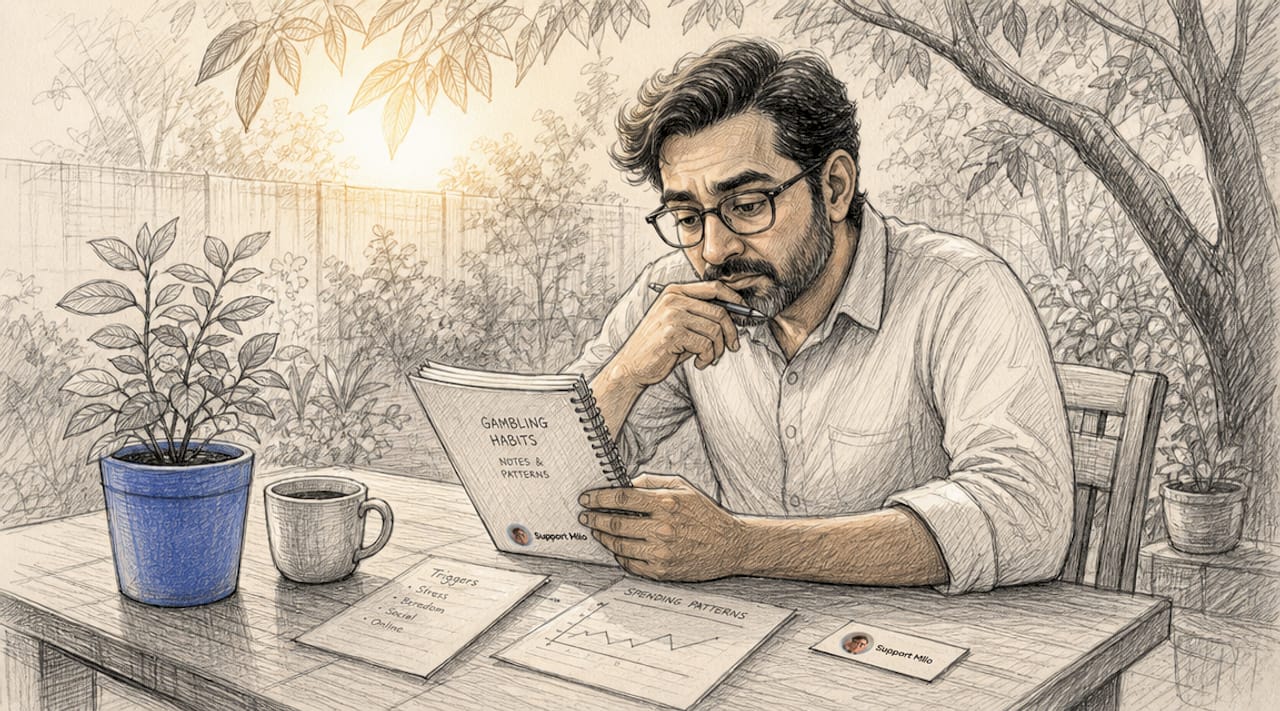
How problem gambling progresses through four key stages
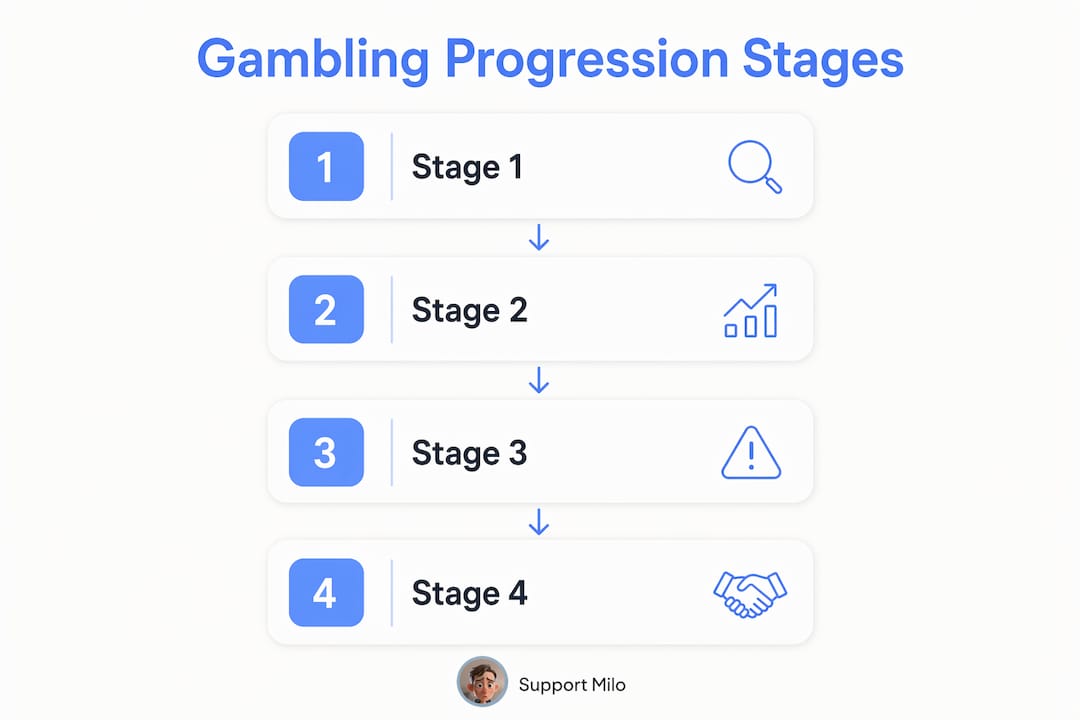
Clinical research describes a 4-stage progression model developed by Dr. Asim Shah and documented in Psychiatric Times. Each stage carries its own emotional signature, behavioral shifts, and escalating consequences. Here is what each stage looks like in practice:
-
Winning and excitement. This is where it begins. Early wins feel like proof of skill. A person placing sports bets or playing online slots hits a few wins and starts to believe they have a system. The brain releases dopamine, your invisible reward signal, reinforcing the behavior. Confidence builds. Gambling feels fun, social, and even profitable. The danger here is that early wins foster unrealistic confidence and a false sense of control.
-
Losing and chasing losses. Losses start to accumulate. Instead of stepping back, the person bets more to "win it back." This is called loss-chasing, and it is the single most reported symptom of gambling disorder. Bets get bigger. Gambling sessions get longer. The person starts borrowing money or dipping into savings. Relationships begin to feel the strain.
-
Desperation and frustration. At this stage, gambling has stopped being fun. It is now a compulsion driven by panic and shame. The person may lie to family members, take out loans, or sell possessions to fund gambling. Work performance drops. Sleep suffers. Anxiety and irritability become constant companions. The person often knows something is wrong but feels unable to stop.
-
Hopelessness and isolation. This is the most severe stage. The person feels trapped, ashamed, and cut off from the people who care about them. Thoughts of self-harm or suicide can emerge. Financial ruin, job loss, and broken relationships may all be present at once. Recovery feels impossible from the inside, even though it is not.
Pro Tip: If you or someone you love is in stage one or two, that is the best time to act. Early wins do not mean control. Chasing losses is not a strategy. It is a signal.
What DSM-5 criteria reveal about symptom patterns
The DSM-5 defines gambling disorder as meeting 4 or more criteria within a 12-month period. These criteria map directly onto the behavioral shifts you see across the four stages. Here is what clinicians look for:
- Preoccupation with gambling, replaying past bets, or planning the next session
- Tolerance-like escalation, needing to bet larger amounts to feel the same excitement
- Withdrawal-like symptoms, including restlessness or irritability when trying to cut back
- Loss of control, repeated failed attempts to stop or reduce gambling
- Escape motivation, gambling to relieve stress, anxiety, or depression
- Loss-chasing, returning to gamble after losing to try to recover money
- Concealment, lying to family members, employers, or therapists about gambling
- Jeopardization, risking or losing a job, relationship, or educational opportunity because of gambling
- Financial dependency, relying on others to cover gambling-related financial problems
One critical insight from longitudinal research: symptom clusters fluctuate over time rather than progressing in a straight line. This means a person may appear to improve while still experiencing persistent loss-of-control symptoms. Recovery is not always linear, and neither is the disorder itself.
| DSM-5 Criterion | Stage Most Common | Key Behavior |
|---|---|---|
| Preoccupation | Stage 1 and 2 | Constant mental focus on gambling |
| Tolerance escalation | Stage 2 | Increasing bet sizes |
| Loss-chasing | Stage 2 and 3 | Betting to recover losses |
| Concealment | Stage 3 | Lying to loved ones |
| Jeopardization | Stage 3 and 4 | Job loss, relationship breakdown |
| Hopelessness | Stage 4 | Withdrawal, self-harm thoughts |
Problem gambling shares neurobiological similarities with substance addictions, which explains why willpower alone rarely resolves it. The brain's reward system is genuinely altered, making professional support a clinical necessity rather than a personal weakness.
What factors influence how quickly gambling problems develop?
Not everyone who gambles develops a problem. But certain factors accelerate the progression significantly. Understanding your personal risk profile is one of the most practical things you can do.
- Early age of gambling. Starting in adolescence is a major risk factor. The developing brain is more vulnerable to dopamine-driven reward loops, and habits formed early are harder to break.
- Mental health and substance use. Anxiety, depression, ADHD, and alcohol use disorder all increase vulnerability. Gambling can start as a coping mechanism and quickly become its own problem.
- Family history. A family background of gambling or addiction increases both exposure and genetic susceptibility.
- Difficulty controlling gambling early on. If a person struggles to stop after a set time or budget from the very beginning, that is a warning sign, not a personality quirk.
- Online and mobile gambling. Online gambling reduces friction and reinforces rapid reward loops. A person can place hundreds of bets in an hour from their phone. That accessibility accelerates progression in ways that a weekly trip to a physical casino simply does not.
- Social normalization. When gambling is treated as a normal social activity, such as sports betting with friends or office pools, early warning signs get dismissed as "just having fun."
Pro Tip: Awareness of your personal risk factors is not a reason to feel shame. It is a tool for earlier, smarter action. Knowing you are more vulnerable means you can set firmer limits from the start.
Individual differences matter here. Two people with identical risk factors can have very different outcomes. The goal is not to predict who will develop a problem, but to recognize the conditions that make progression more likely.
What are the broader impacts of problem gambling beyond finances?
The financial damage from gambling addiction is visible and measurable. The emotional and relational damage is often hidden for much longer. Understanding the full scope of gambling harm helps you recognize the problem even when bank statements look fine.
Here are the most common non-financial consequences that accompany progression:
- Anxiety and depression. Gambling disorder and mood disorders frequently co-occur. The stress of hiding losses and managing debt creates a constant low-grade anxiety that erodes daily functioning.
- Sleep disruption. Late-night gambling sessions, financial worry, and heightened cortisol levels all disrupt sleep. Chronic sleep deprivation then worsens decision-making, creating a feedback loop.
- Relationship breakdown. Secrecy, hiding gambling debts, and emotional withdrawal damage trust with partners, children, and close friends. Many relationships do not survive stage 3 or 4 without professional support.
- Job loss and housing instability. Missed deadlines, unexplained absences, and borrowing from colleagues all put employment at risk. Housing instability follows when rent or mortgage payments are diverted to gambling.
- Emotional exhaustion and isolation. Carrying a secret this heavy is exhausting. Many people in later stages describe feeling completely alone, even when surrounded by family.
- Thoughts of self-harm. This is a reality that deserves direct acknowledgment. Problem gambling is associated with elevated rates of suicidal ideation, particularly in the desperation and hopelessness stages.
"Gambling harm rarely announces itself loudly. It builds quietly through small compromises, small lies, and small losses until the weight becomes impossible to carry alone."
The impact of gambling on mental health extends to everyone in the household, not just the person gambling. Partners and children absorb the stress, the secrecy, and the financial instability. Recognizing these ripple effects is part of understanding the full picture.
How can recognizing progression stages help you act sooner?
Early recognition is the most powerful tool available. The challenge is that the signs most people watch for, such as large financial losses, are often the last to become visible. The signs that appear earliest are behavioral and emotional.
Here is what to watch for at each stage, regardless of how much money has been lost:
- Stage 1 red flags: Talking about gambling constantly, celebrating wins loudly while minimizing losses, spending more time gambling than planned
- Stage 2 red flags: Borrowing money without clear explanation, becoming irritable when unable to gamble, returning to gamble immediately after a loss
- Stage 3 red flags: Lying about whereabouts or finances, selling personal items, withdrawing from social activities, declining work performance
- Stage 4 red flags: Complete withdrawal from relationships, expressions of hopelessness, talk of being a burden to others
Asking about secrecy, borrowing, and jeopardizing relationships reveals escalation far better than asking how much money has been lost. If you are supporting a loved one, focus your conversations on behavior and emotional wellbeing, not just bank balances. Approach with curiosity and care, not accusation. A question like "I've noticed you seem stressed lately. Is there anything you want to talk about?" opens more doors than a confrontation about money.
Understanding gambling relapse patterns also matters here. Because symptoms fluctuate, someone who appears to be doing better may still be at risk. Ongoing awareness and gentle check-ins are more effective than a single intervention.
What I've learned about why the stages matter more than the money
I have seen a lot of people come to Support-milo after years of believing the problem would resolve itself once the finances improved. The money was never really the core issue. It was the symptom of something much deeper: a brain caught in a reward loop it could not escape alone.
The four-stage model is not just a clinical framework. It is a map that helps people say, "I recognize where I am." That recognition is genuinely powerful. It dismantles the shame that keeps people silent and replaces it with something more useful: context. When you understand that chasing losses is a documented stage of a recognized disorder, it stops feeling like a personal moral failure and starts feeling like something that can be addressed.
What I find most important is the fluctuation piece. Symptoms do not march forward in a straight line. Someone can seem better for months and then slip back into loss-chasing behavior. This is not weakness. It is how this disorder works, and it means that support needs to be ongoing, not a one-time conversation. The people who recover most successfully are the ones who stay connected to a community that understands the long game.
If you are reading this for yourself, you are already doing something courageous. If you are reading it for someone you love, your awareness is one of the most protective things in their life right now.
— Milo
You don't have to figure this out alone
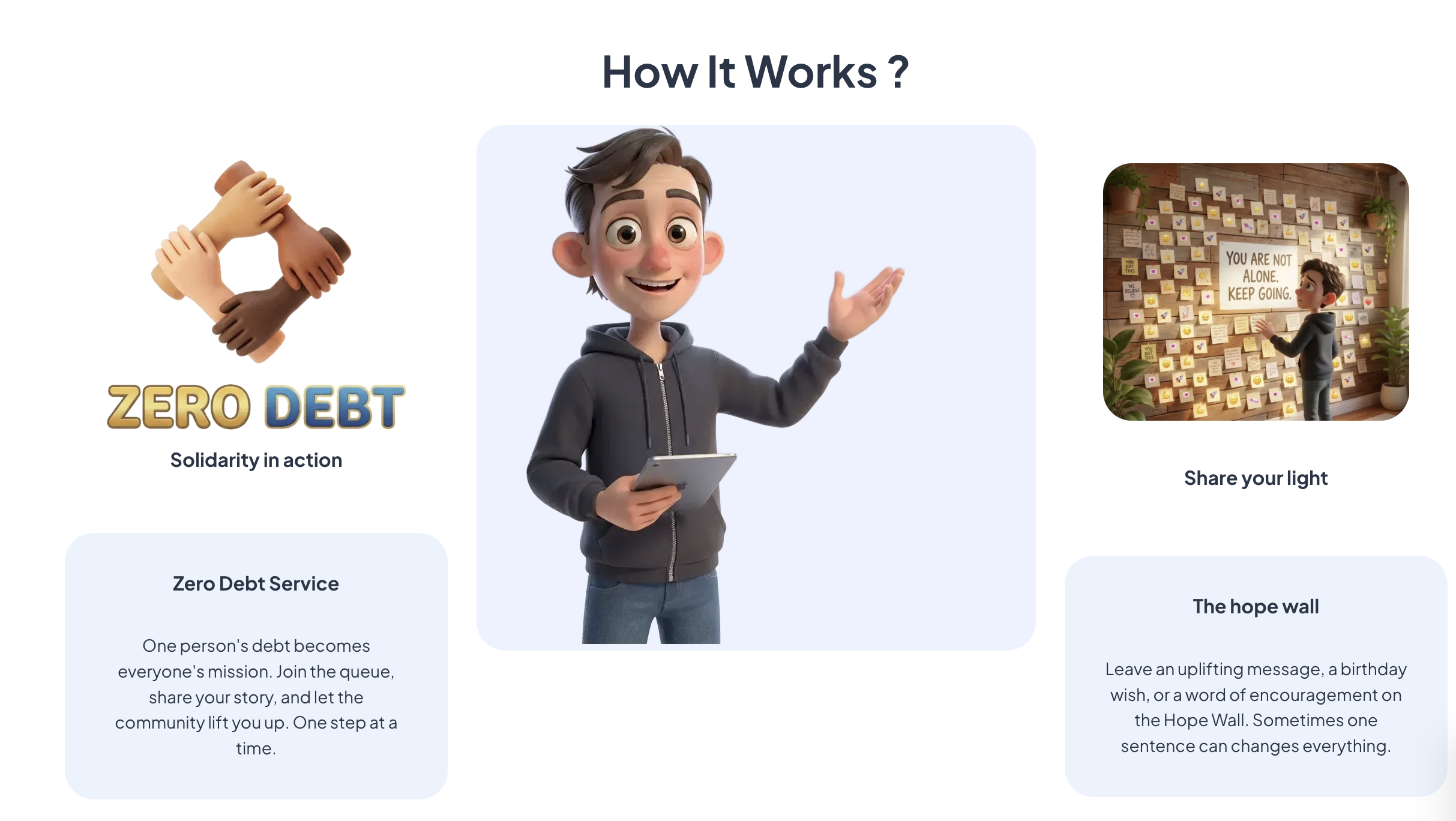
Support-milo exists for exactly this moment. Whether you are just starting to recognize the warning signs of gambling issues in yourself or a loved one, or you are already deep in the financial and emotional fallout, this community is here. Support-milo offers a space to share your story, track your path to financial recovery, and connect with others who genuinely understand what this feels like. The Hope Wall, debt tracking tools, and community stories are all built around one belief: no one should carry this alone. Reaching out is not a last resort. It is a first step toward something better. Visit Support-milo to find the support that fits where you are right now.
FAQ
What are the four stages of gambling addiction?
The four stages are winning and excitement, losing and chasing losses, desperation and frustration, and hopelessness and isolation. Each stage involves escalating loss of control, emotional harm, and behavioral changes documented by Dr. Asim Shah in Psychiatric Times.
How do you recognize problem gambling early?
Early warning signs include gambling longer than planned, talking about gambling constantly, and returning to gamble immediately after a loss. NHS Inform recommends focusing on loss-of-control behaviors rather than the amount of money lost.
Is problem gambling progression always linear?
No. A 5-year longitudinal study shows that DSM-5 symptom clusters fluctuate over time, meaning a person can appear to improve while still experiencing persistent loss-of-control symptoms. Ongoing monitoring is more effective than a single assessment.
What mental health issues are linked to problem gambling?
Anxiety, depression, sleep disruption, and in severe cases suicidal ideation are all associated with problem gambling progression. CHAP research confirms that emotional and relational harm often develops gradually and remains hidden long before it becomes visible.
How does online gambling affect addiction speed?
Online and mobile gambling reduces friction and reinforces rapid reward loops, which can accelerate progression compared to in-person gambling. NHS Inform identifies online and mobile access as a key vulnerability factor, particularly for young adults.