


Why Collective Stories Inspire Debt Repayment
Collective storytelling is defined as the practice of sharing personal financial experiences within a community to create shared meaning, reduce isolation, and motivate sustained action. Research shows that why collective stories inspire debt repayment comes down to one core truth: hearing someone else say "I was where you are, and I got through it" rewires your emotional response to debt from shame into agency. A 2024 study found that 67% of users on community-driven financial platforms reported significantly reduced financial anxiety after adopting retelling methodologies. Platforms like Kikototo and Support-milo have built entire ecosystems around this insight, proving that shared narratives are not just comforting. They are one of the most effective tools for changing financial behavior.
Why collective stories inspire debt repayment
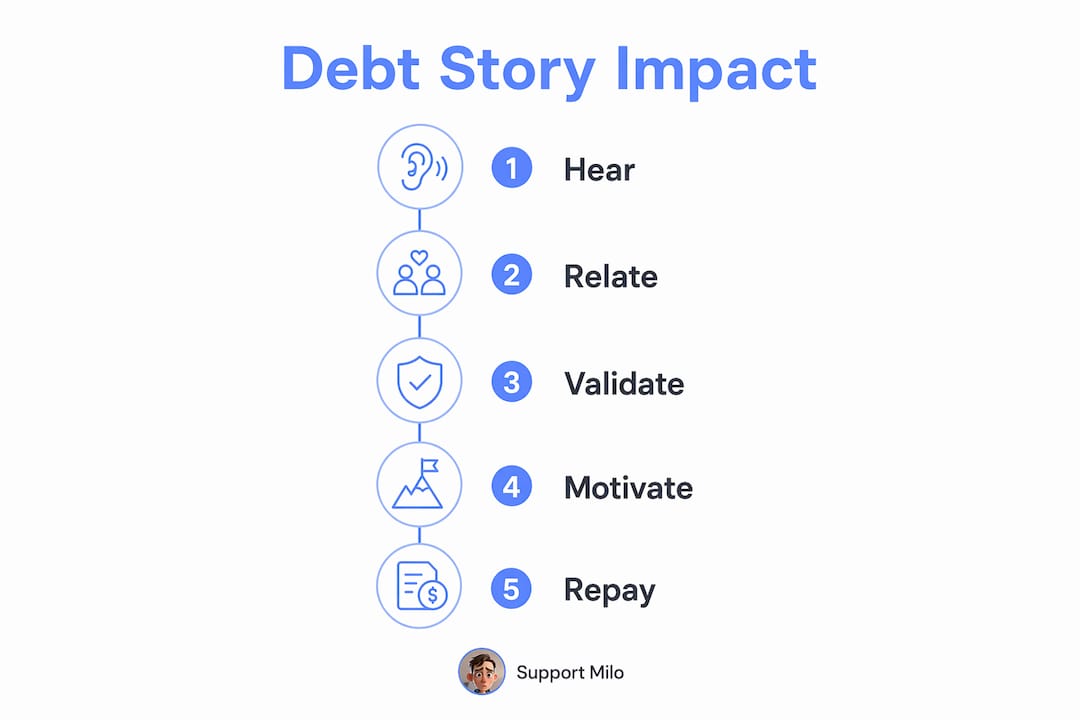
The psychological term for what happens when you hear someone else's debt story is narrative transportation. You mentally step into their experience, feel their relief when they make progress, and unconsciously begin to believe the same outcome is possible for you. This is not wishful thinking. It is a documented cognitive process that conviction narratives activate, acting as a "currency of thought" that enables individuals to overcome uncertainty and sustain high-effort repayment approaches.

The impact of collective narratives goes beyond inspiration. Shared stories provide what researchers call pre-validated behavioral scripts. When someone in your community has already navigated the exact fear you are facing, their story becomes a map. You do not have to figure out the path alone. You borrow their experience, adapt it to your situation, and move forward with far more confidence than raw financial advice alone could ever give you.
Stories motivating debt payoff also work because they carry emotional weight that statistics simply cannot. Emotionally charged social stories provide adaptive blueprints others can personalize for their own repayment journey, making them far more inspiring than spreadsheets or interest rate charts. This emotional resonance is what keeps people engaged over months and years, not just the first week of motivation.
Here is what the research says drives this effect:
- Reduced anxiety: Community retelling methodologies cut financial anxiety by 67%, freeing up mental energy that was previously consumed by worry.
- Social accountability: Sharing your story publicly creates a commitment device. Others now know your goal, and that social contract strengthens follow-through.
- Emotional validation: Hearing "me too" from someone who has lived your experience normalizes the struggle and removes the paralyzing weight of shame.
- Cognitive reframing: Stories shift your internal narrative from "I am bad with money" to "I am someone who is actively changing."
Pro Tip: Join a community forum or accountability group and share one specific milestone from your debt repayment journey this week. Public sharing, even a single post, activates the social commitment mechanism and measurably increases follow-through.
What role does narrative framing play in effective debt storytelling?
Not all debt stories are created equal. The way a story is framed determines whether it empowers the listener or leaves them feeling worse. Blame-based narratives cause polarization and hinder shared understanding, while constructive narratives enable collaboration and effective debt management. This distinction matters enormously for anyone using storytelling as a recovery tool.
A blame-based story sounds like: "The casino took everything from me and the system is rigged." A constructive story sounds like: "I lost everything to gambling, and here are the three things I did to start rebuilding." Both are honest. Only one gives the listener something to work with. Framing that emphasizes agency and collaboration over victimhood is what separates stories that inspire action from stories that deepen despair.
There is also a trap worth naming directly. Passive story consumption, scrolling through other people's debt journeys without engaging, creates a false sense of progress. You feel motivated for a moment, but nothing changes. Active authorship of debt stories, such as public accountability posts and personal narrative rewriting, is significantly more effective than passive consumption in driving real repayment behavior.
"The most powerful shift happens when you stop being the audience of someone else's story and become the author of your own."
Practical techniques for active story authorship include:
- Template-based rewriting: Use a community-provided structure (situation, turning point, action, outcome) to write your own debt story. This forces clarity and commitment.
- Accountability journals: Write weekly entries that track both numbers and emotions. The emotional record is often more motivating than the financial one.
- Community posting: Share progress updates in a group setting. Even brief posts create accountability loops that passive reading never does.
- Narrative reframing exercises: Rewrite a moment of financial failure as a turning point rather than a dead end. This is not denial. It is a cognitive tool that builds resilience.
Pro Tip: Use Support-milo's community story templates to write your own debt narrative. Starting with a structured format removes the blank-page paralysis and gets your story out where it can both help you and inspire others.
How collective narratives support people dealing with gambling addiction debt
Gambling-related debt carries a layer of stigma that most other forms of debt do not. The shame is compounded by secrecy, and secrecy leads to isolation. Isolation is where recovery stalls. Shared debt stories reduce stigma and isolation among people repaying gambling-related debt, directly enhancing emotional resilience and the capacity to take action.
The experience of hearing someone say "I hid my gambling debt for two years and I still paid it off" does something that no financial counselor's advice can replicate. It proves that the shame you carry is not unique to you. It normalizes the experience without minimizing it. And it shows a way forward that feels human and achievable rather than clinical and distant.
Community-driven narrative interventions work especially well for gambling addiction recovery because the addiction itself is rooted in distorted thinking patterns. Collective stories gently challenge those patterns by offering alternative scripts. When you repeatedly hear stories of people who felt hopeless and still found a path, your brain begins to update its own predictions about what is possible for you.
Support strategies that work particularly well in this context include:
- Peer story circles: Small groups where members share their gambling debt experiences in a structured, non-judgmental setting. The intimacy of small groups accelerates trust and emotional safety.
- Hope Wall contributions: Platforms like Support-milo feature a Hope Wall where members post encouraging messages. Reading and contributing to these creates a reciprocal support loop.
- Milestone sharing: Publicly celebrating the first $500 paid off, or the first month without gambling, reinforces positive behavior and signals to others that progress is real and possible.
- Rebuilding narratives: Learning how to ask for support after addiction is itself a skill, and community stories model exactly how to do it with dignity.
The community influence on finances is not abstract here. When someone in your peer group pays off a chunk of gambling debt and shares that story, your own belief in your ability to do the same increases measurably. That is the power of social proof applied to financial recovery.
How to create and use shared debt stories for real results
Knowing that stories work is one thing. Building the habit of using them is another. Here is a practical framework for creating and leveraging collective narratives to sustain your debt repayment momentum.
1. Start in a safe space. Before sharing publicly, write your story privately or share it with one trusted person. This low-stakes first step builds the confidence to go wider. Support-milo's community is designed to be exactly this kind of safe space.
2. Use a story structure. The most effective debt repayment success stories follow a simple arc: where you started, what changed, what you did, and where you are now. This structure makes your story useful to others and clarifying for yourself.
3. Add visual progress tracking. Visual progress indicators increase goal completion rates by 42%. Pair your story with a debt tracker chart and share both. The combination of narrative and visual data is far more motivating than either alone.
4. Celebrate milestones publicly. Milestone rewards tied to visual progress charts reinforce positive behavior in debt repayment communities. Announce your wins, no matter how small. Every celebration is a signal to someone else that progress is real.
5. Find an accountability buddy. Pair with someone at a similar stage in their repayment journey. Check in weekly, share your story updates, and celebrate each other's progress. This bilateral accountability doubles the motivational effect of storytelling alone.
Here is a comparison of different storytelling approaches and their practical benefits:
| Approach | Format | Best for | Key benefit |
|---|---|---|---|
| Public community post | Written update | Social accountability | Activates commitment mechanism |
| Accountability journal | Private writing | Emotional processing | Builds self-awareness and resilience |
| Peer story circle | Group conversation | Deep trust and connection | Reduces shame and isolation |
| Hope Wall message | Short encouragement | Giving and receiving hope | Creates reciprocal motivation loop |
| Visual progress share | Chart plus narrative | Goal reinforcement | 42% higher completion rates |
Pro Tip: Combine a written story update with a simple debt tracker image when you post in a community. The visual element makes your progress concrete and gives others a model they can immediately replicate.
What I have learned from watching stories change lives
I have seen people arrive at Support-milo carrying debt that felt like a life sentence. What shifts them is almost never a new budgeting strategy. It is the moment they read someone else's story and think, "That person sounds exactly like me, and they made it." That recognition is the spark.
The role of storytelling in debt management is often underestimated because it does not look like a financial tool. It looks like conversation, like community, like people being honest with each other. But the research backs up what I have observed directly. Conviction narratives bypass the paralysis that comes with overwhelming debt by giving people a pre-tested path to follow. They solve the "I don't know where to start" problem better than any spreadsheet.
The pitfall I see most often is narrative passivity. People read stories, feel inspired, and then do nothing. The inspiration fades within 48 hours. The fix is simple: write something. Post something. Tell one person one true thing about your debt today. Active authorship is what converts inspiration from shared experiences into actual repayment behavior.
Collective storytelling is not a soft, feel-good add-on to debt recovery. It is a core mechanism. The community influence on finances is real, measurable, and available to anyone willing to both share and receive. You do not have to have your story figured out before you start telling it. You just have to start.
— Milo
Start your story with Support-milo
If you are ready to move from reading stories to living one, Support-milo is built for exactly this moment. The platform brings together people navigating debt and gambling addiction recovery through shared narratives, progress tracking, and genuine community accountability.
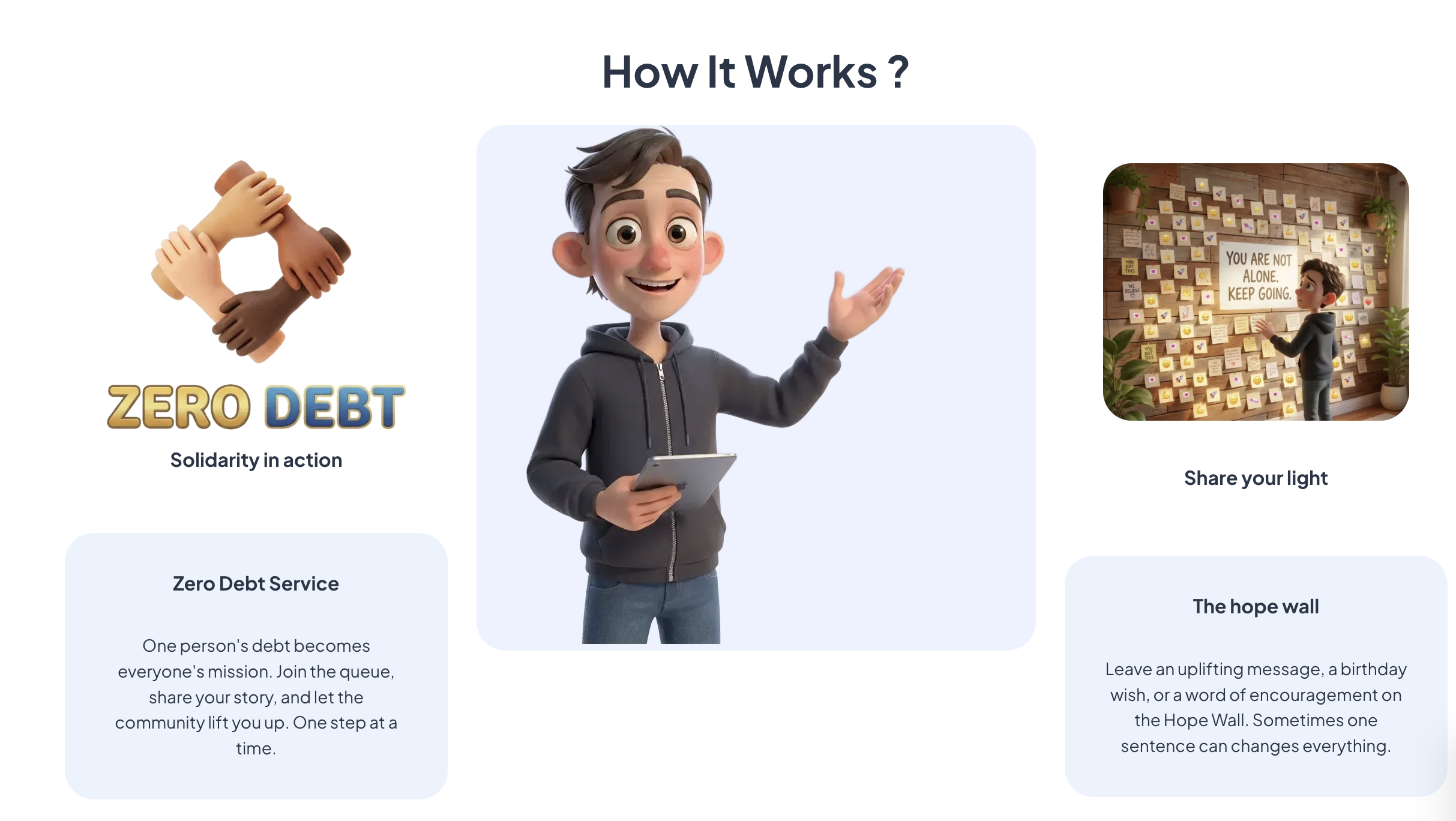
Support-milo's community-driven platform gives you the tools to share your story, track your progress visually, and connect with others who understand what you are carrying. Whether you are just starting out or celebrating a hard-won milestone, the Hope Wall and community features are there to hold you up. For organizations and nonprofits supporting people in financial recovery, Support-milo's enterprise solutions offer collaborative narrative tools at scale. And if you are ready to commit to a debt-free future, explore the zero debt resources built around collective action and community support.
FAQ
Why do collective stories inspire debt repayment more than financial advice?
Collective stories carry emotional resonance that raw financial advice cannot replicate. Research shows that emotionally charged narratives provide adaptive blueprints others can personalize, making them far more motivating than statistics or interest rate explanations alone.
How does sharing my debt story reduce my own anxiety?
Retelling your financial experience within a supportive community activates a process of narrative reframing that reduces shame and isolation. Studies on community-driven platforms found that 67% of users reported significantly reduced financial anxiety after adopting retelling methodologies.
What makes a debt story constructive rather than harmful?
Constructive narratives emphasize agency, collaboration, and forward movement rather than blame or victimhood. A story that frames debt as a turning point rather than a permanent identity gives both the teller and the listener something to act on.
How can people with gambling addiction debt benefit from community storytelling?
Shared stories normalize the experience of gambling-related debt, directly reducing the stigma and isolation that often stall recovery. Community narratives show that repayment is possible and model the specific steps others have taken, making the path feel real and achievable.
Is passive story consumption enough to motivate debt repayment?
Passive reading provides a short-term motivation boost but rarely drives lasting behavior change. Active authorship, such as posting updates, writing accountability journals, or joining peer story circles, is significantly more effective at sustaining repayment momentum over time.