


Rebuilding your life after gambling addiction and debt is one of the hardest things you can ever do. The shame, the financial wreckage, the strained relationships. It all piles up. And somewhere in the middle of it, you have to do something that feels almost impossible: ask for support to rebuild. Not because you failed, but because no one gets through this alone. This guide walks you through exactly how to identify what kind of help you need, how to prepare your story, where to find real resources, and how to reach out in ways that actually work.
Key takeaways
| Point | Details |
|---|---|
| Know what support you need | Identify whether you need emotional, financial, or practical help before reaching out to anyone. |
| Prepare before you ask | Organize your debts, recovery progress, and personal story so your request is clear and credible. |
| Use the right channels | Online communities, nonprofits, and peer groups each serve different needs. Match your request to the right channel. |
| Act quickly on programs | Many financial aid programs have deadlines. Apply early to avoid losing access to critical funds. |
| Community fills the gaps | Support centers and volunteers are built for people who have run out of personal resources. You qualify. |
Ask for support to rebuild: the three types that matter
When people think about getting help for recovery, they often picture one thing: money. But rebuilding after gambling addiction involves three distinct types of support, and you probably need all three at different points. Understanding which one you are missing right now will make your requests sharper and more effective.
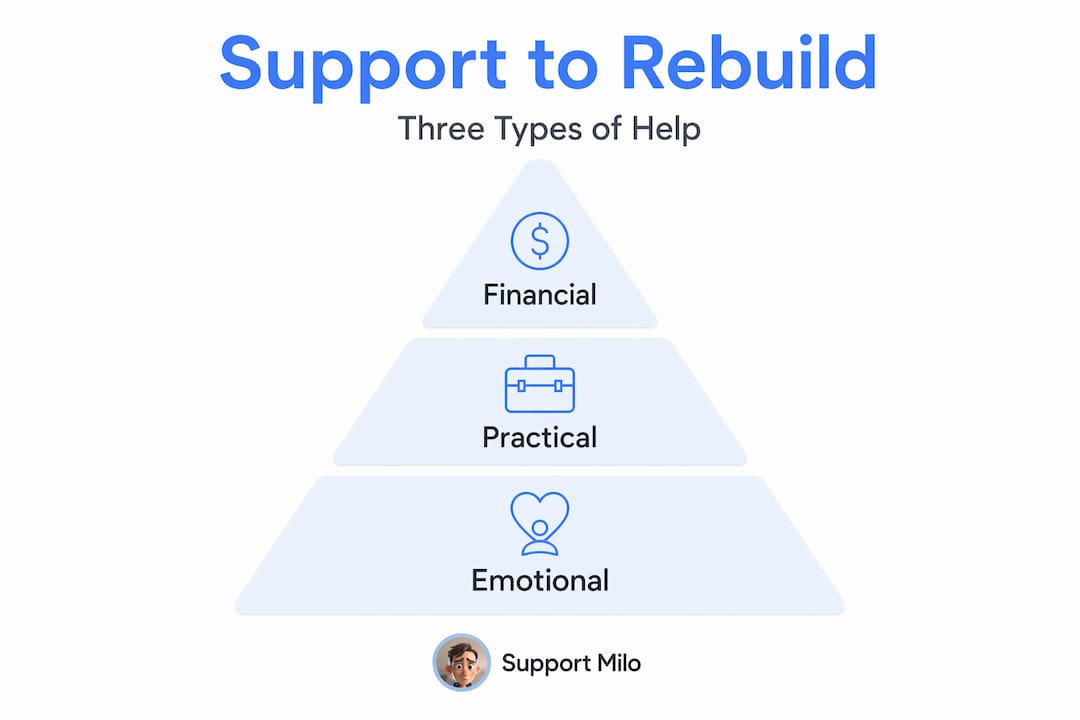
Emotional support is the foundation. This includes counseling, peer support groups, and simply having someone who listens without judgment. Gamblers Anonymous chapters, therapists who specialize in behavioral addiction, and online forums all fall into this category. Community recovery centers connect survivors with volunteers and peer mentors who have lived through similar struggles.
Financial help is what most people eventually need to seek assistance for reconstruction of their daily lives. This includes debt consolidation programs, nonprofit grants, emergency funds, and community fundraising. Some programs offer forgivable loans. Others provide direct debt relief. The key is knowing that these options exist and that you are eligible to ask.
Practical aid is the category people forget. This means advice on budgeting, legal guidance on debt, help with paperwork for aid programs, and advocacy when dealing with creditors. Many nonprofit organizations offer this for free.
- Emotional support: counseling, peer groups, online communities, crisis lines
- Financial help: grants, debt relief programs, community fundraising, emergency funds
- Practical aid: budgeting coaching, legal advice, application assistance, advocacy
Pro Tip: If you are unsure where to start, ask yourself this one question: "What is the single thing making it hardest to move forward right now?" Your answer will tell you which type of support to prioritize first.
Preparing to ask: organize your story first ️
Here is something most people skip. They reach out for help before they know what they actually need. The result? Vague requests, awkward conversations, and missed opportunities. Documented needs are far more effective than verbal accounts when working with recovery organizations and aid programs. Preparation is not about performing. It is about being clear enough that someone else can actually help you.
Follow these steps before you make any request for rebuilding aid:
-
Write down your current debts. List every creditor, the amount owed, and the monthly payment. You do not need to share all of this publicly, but having it organized helps you communicate your situation accurately.
-
Note your recovery milestones. How long have you been gambling-free? What steps have you already taken? Showing progress builds credibility and demonstrates that your request is part of a real effort.
-
Identify your most urgent need. Is it rent? Debt repayment? Counseling costs? Narrowing it down to one specific need makes it easier for others to say yes.
-
Gather any relevant documentation. Proof of income, debt statements, and any prior program applications matter. Many agencies require verified documentation before approving assistance claims.
-
Write a short personal statement. Three to five sentences about who you are, what happened, and what you are working toward. Keep it honest and specific. Avoid vague language like "I'm going through a hard time."
Pro Tip: Create a simple "rebuild checklist" that you keep updated. Include your debts, your support contacts, your recovery progress, and your most pressing needs. Bring this to every consultation or aid application. It signals that you are serious, organized, and ready to use help effectively.
The emotional preparation matters just as much. Many people feel shame when soliciting help to restore their lives after addiction. That shame is understandable, but it is not accurate. Asking for help is a sign of self-awareness, not weakness. Think of Woody from Toy Story: he had to admit he could not save Buzz alone. The moment he asked for help from the whole group, everything changed.

Effective ways to request help to rebuild
You have done the preparation. Now comes the part that feels most vulnerable: actually reaching out. The good news is that there are more channels available than most people realize, and each one suits a different kind of request.
Online communities are often the easiest first step. Platforms built around gambling recovery and debt support allow you to share your story, receive encouragement, and connect with people who have navigated the same path. The anonymity reduces the fear of judgment. Many users find that simply posting their story for the first time is a turning point.
Nonprofit organizations are where you go when you need financial and practical support. Organizations focused on addiction recovery and financial rehabilitation often have counselors who can guide you through the process of applying for grants or debt relief programs. Reducing friction in your ask significantly increases the chance that others will respond and give.
Fundraising platforms can work for personal debt recovery when used transparently. The most effective campaigns include a specific goal, a clear explanation of how the money will be used, and regular updates. Vague campaigns rarely gain traction. Specific ones do.
Here are the most common mistakes people make when requesting support:
- Being too vague: "I need help" gets ignored. "I need $200 to cover my next debt payment while I complete my counseling program" gets responses.
- Waiting too long: applying early to programs is critical because funding runs out.
- Hiding the addiction: Trying to frame your situation as purely financial without mentioning the root cause makes your story feel incomplete. Honesty builds trust.
- Asking once and giving up: Most people need to reach out multiple times across multiple channels before finding the right fit.
"The most powerful thing you can say is the truth. Not a polished version of it. The real version. People give their time, money, and energy to stories they believe in."
Navigating programs and resources
This is where many people get stuck. They know help exists, but they do not know where to find it or how to qualify. Here is a practical overview of the main resource types available to people rebuilding after addiction and debt.
| Resource type | What it offers | Key eligibility notes | Application tip |
|---|---|---|---|
| Nonprofit debt relief | Debt repayment assistance, counseling | Income-based, often requires proof of hardship | Apply to multiple programs at once |
| Government aid programs | Emergency funds, housing assistance | Strict documentation requirements | Gather all paperwork before applying |
| Community fundraising | Peer-to-peer financial support | Open to most, effectiveness varies | Be specific about your goal and timeline |
| Peer support groups | Emotional support, accountability | Open access, no income requirements | Attend consistently for best results |
| Recovery center grants | Financial and practical rebuilding aid | May require program enrollment | Ask about grants during intake |
Government programs often have income-based eligibility requirements, such as earning below 80% to 120% of the area median income. Nonprofit programs tend to be more flexible, but they also have limited funding. Survivors who wait often find programs have closed before they apply.
One thing that surprises many people: you can and should apply to multiple programs at the same time. Waiting for one response before applying to another is a mistake that costs time and money. Think of it like job applications. You do not wait to hear back from one employer before sending the next resume.
Pro Tip: When you connect with a nonprofit support hub, ask specifically: "What programs am I eligible for right now?" Many organizations have access to resources they do not advertise publicly. You have to ask.
FEMA-style assistance programs for uninsured losses and critical home repair programs that offer forgivable loans after five years of occupancy both exist as models for how layered support systems work. The same principle applies to addiction and debt recovery. Multiple programs, multiple layers, applied simultaneously.
My perspective on asking for help
I have seen what happens when people try to rebuild alone. They make progress for a few months, and then something breaks. A missed payment. A relapse. A creditor call that undoes a week of emotional work. Recovery fatigue is real. It typically hits hardest around 18 months into the process, when the initial motivation has worn off and the finish line still feels far away.
What I have learned is this: the people who rebuild successfully are almost never the ones who did it alone. They are the ones who got over their pride early enough to ask. Not because they were weak, but because they were smart enough to recognize that shared strength is stronger than individual willpower.
The hardest part is not the paperwork or the applications. It is the internal story you tell yourself about what asking for help means. If you believe it means failure, you will delay until the window closes. If you believe it means resilience, you will act while there is still time.
You are not starting over. You are starting with experience. And the community around you, whether it is a peer group, a nonprofit, or a platform like Support-milo, is not charity. It is how humans have always rebuilt. Together.
— Milo
How Support-milo helps you rebuild
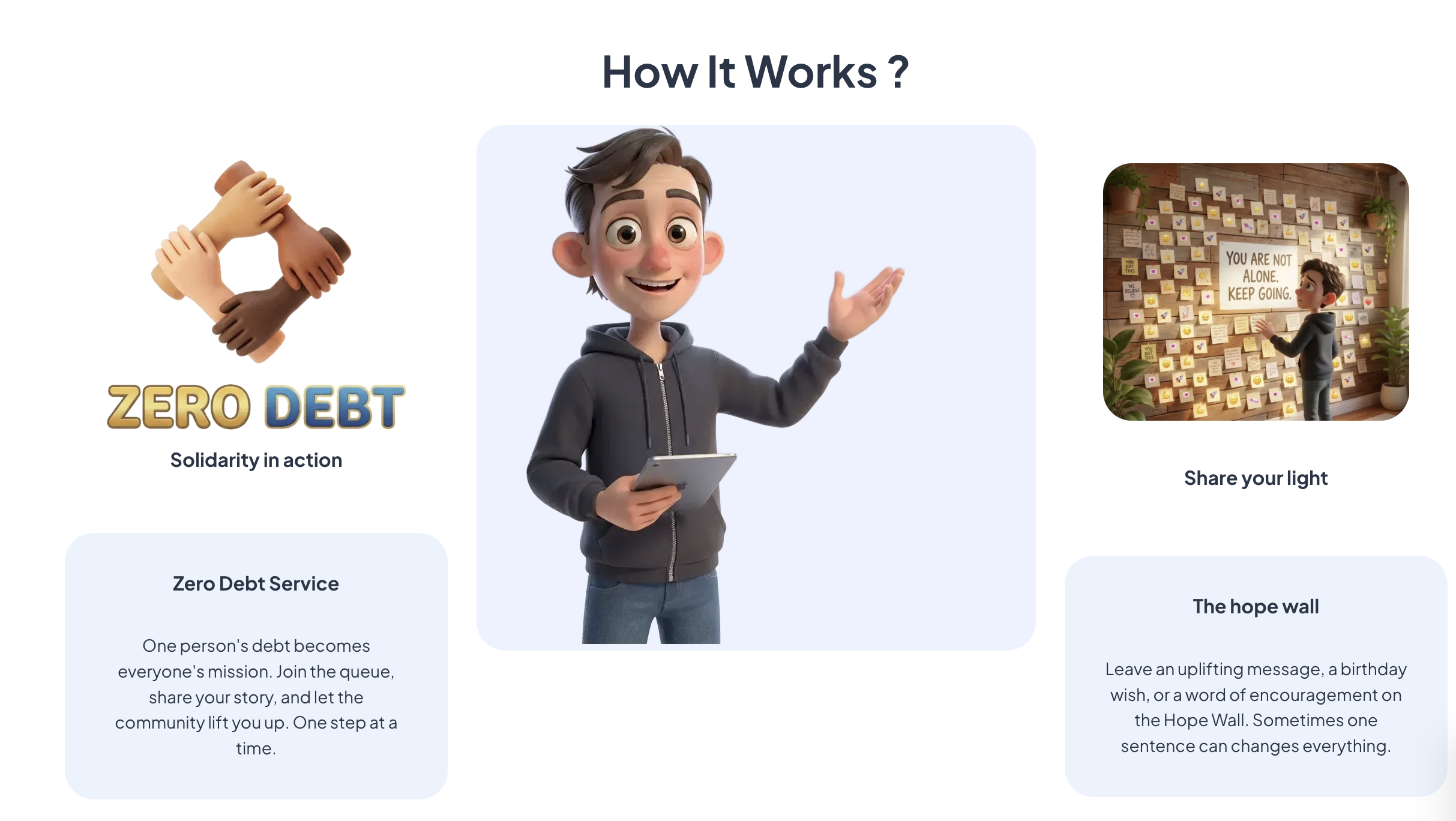
Support-milo was built for exactly this moment. When you are ready to appeal for rebuilding support but do not know where to start, the platform connects you to a community of people who understand what you are going through, because they have been there too.
Through Support-milo, you can track your debt repayment progress, share your story on the Hope Wall, and connect with others in recovery who can offer both encouragement and practical guidance. The zero debt program is designed specifically for people rebuilding after financial hardship, offering a structured path to clearing debt with community backing. For organizations and nonprofits looking to support individuals at scale, enterprise-level solutions connect recovery programs to the people who need them most.
You do not have to figure out how to ask for rebuilding aid on your own. Start here and let the community meet you where you are.
FAQ
What does it mean to ask for support to rebuild?
Asking for support to rebuild means reaching out for emotional, financial, or practical help after a major setback like gambling addiction or debt. It involves identifying your needs, organizing your situation, and connecting with people, programs, or platforms that can help you move forward.
How do I start requesting help to rebuild after gambling addiction?
Start by writing down your specific needs and current debts, then reach out to a nonprofit, peer support group, or community platform like Support-milo. Being specific about what you need makes it much easier for others to respond with real help.
Are there financial programs to help with debt recovery?
Yes. Nonprofit debt relief programs, community fundraising, and some government assistance programs offer financial support for people rebuilding after addiction and financial hardship. Eligibility often depends on income level and documentation of your situation.
Why is it hard to ask for help during recovery?
Shame and stigma make it hard to ask. Many people believe they should be able to handle their problems alone, but recovery fatigue and depleted resources make outside support not just helpful but necessary for lasting recovery.
How quickly should I apply for rebuilding aid programs?
Apply as soon as possible. Many programs have limited funding and firm deadlines, and waiting too long often means losing access to funds that could have made a real difference in your recovery timeline.