


Gambling losses don't just empty your wallet. They can leave you feeling ashamed, isolated, and unsure where to even begin picking up the pieces. If that's where you are right now, you're not alone, and this is not the end of your story. Thousands of people have faced the exact same weight you're carrying and found their way back to stable, meaningful lives. This guide is built for you: practical, compassionate, and grounded in real recovery strategies. Step by step, we'll walk through how to assess your situation, build a support network, create an action plan, prevent relapse, and celebrate every bit of progress along the way. 💪
Table of Contents
- Understand your starting point and build your support
- Create your personalized recovery and debt action plan
- Put safeguards and relapse prevention into practice
- Track progress and celebrate realistic milestones
- What most guides miss about recovering after gambling losses
- Get connected: Find support for your journey
- Frequently asked questions
Key Takeaways
| Point | Details |
|---|---|
| Build a support foundation | Combining emotional and practical support networks increases your odds of sustainable recovery. |
| Actionable, tailored plans work best | Personalizing your recovery and debt plans leads to better engagement and progress. |
| Relapse is a detour, not the end | Taking immediate action and telling a safe person can prevent the slip-shame-chase cycle. |
| Track progress creatively | Celebrate both financial and emotional milestones—every step counts towards rebuilding your life. |
| Stay connected for long-term change | Ongoing check-ins with community or support groups reinforce positive habits and prevent isolation. |
Understand your starting point and build your support
Recovery doesn't begin with a perfect plan. It begins with an honest look at where you are right now.
Start with what we call a mental inventory. Ask yourself two simple questions: How am I doing emotionally? And what does my financial situation actually look like? You don't need exact numbers yet. You just need to be willing to look. Many people in early recovery avoid this step because it feels overwhelming, but naming your reality is the first act of courage in this process.
Once you have a rough picture, the next step is telling someone. Not everyone, not all at once. Just one safe, trusted person who won't judge you. This could be a close friend, a family member, or a counselor. Sharing your situation out loud reduces the shame that keeps gambling cycles alive. Secrecy is one of the biggest obstacles to recovery, and breaking it, even once, shifts something important inside you.
From there, building a broader support network makes a real difference. Effective recovery for gambling addiction commonly combines behavioral therapy, especially CBT, motivation-focused interventions, medication management for co-occurring conditions, and family or couples counseling when needed. You don't have to access all of these at once, but knowing they exist helps you build toward them.

Here's a quick look at your support options:
| Support type | What it offers | Best for |
|---|---|---|
| Community groups | Peer connection, shared experience | Ongoing accountability |
| Family support | Emotional closeness, practical help | Early disclosure |
| Professional counselor | Structured therapy, CBT tools | Deep behavioral change |
| Peer support programs | Lived experience, non-judgmental | Reducing isolation |
| Online resources | 24/7 access, anonymity | First steps, late-night urges |
Explore the community support resources available to you, and don't overlook debt support options that are specifically designed for people in your situation.
- Start with one trusted person before expanding your circle
- Look into both in-person and online groups, since flexibility matters
- Don't wait until you feel "ready" because that moment rarely comes on its own
- Ask for help with finances separately from emotional support if needed
Pro Tip: Trying to recover alone is one of the most common mistakes people make. Isolation feeds shame, and shame feeds gambling. Even one supportive connection can interrupt that cycle completely.
Create your personalized recovery and debt action plan
With some support in place, it's time to build a plan that actually fits your life.
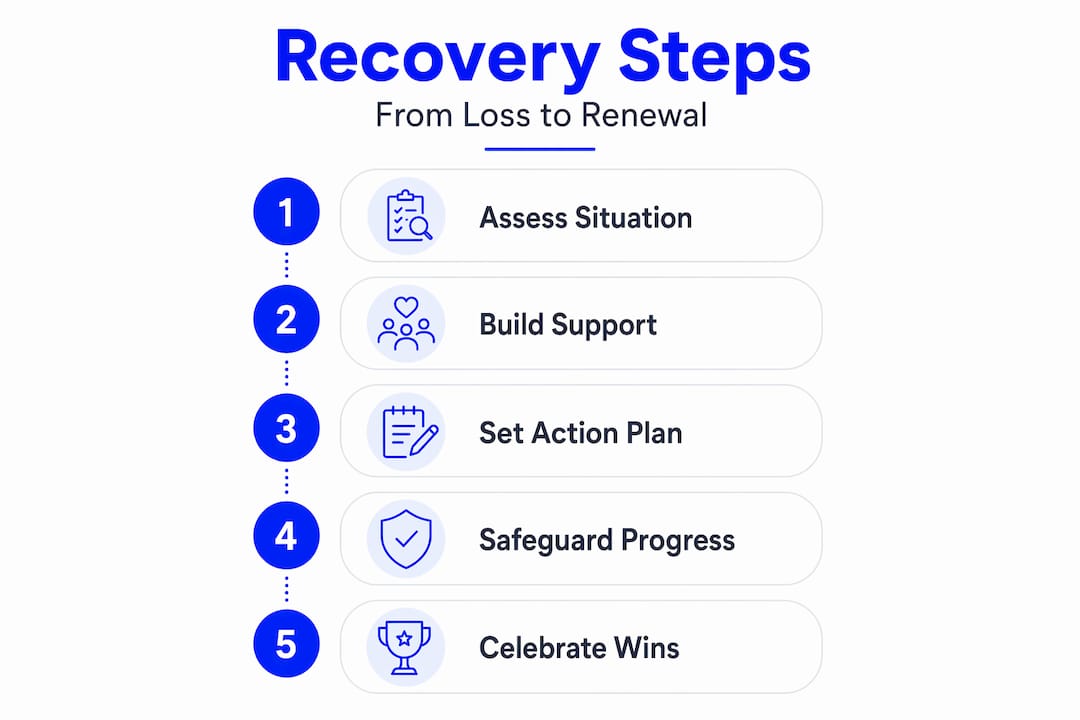
SMART goals are your best tool here. SMART stands for Specific, Measurable, Achievable, Relevant, and Time-bound. Instead of saying "I want to stop gambling," try "I will attend one support group meeting per week for the next four weeks." Instead of "I want to pay off my debt," try "I will pay $50 toward my highest-interest balance by the 15th of this month." Small, specific targets feel achievable. And achieving them builds the momentum you need to keep going.
Here's a step-by-step approach to mapping your financial recovery:
- List every debt you owe, including amounts, interest rates, and minimum payments. Write it all down, even if it's uncomfortable to see.
- Prioritize essentials first: rent, utilities, food, and transportation. These come before debt repayment.
- Identify your income sources and calculate what's realistically left after essentials.
- Choose one debt to focus on, either the smallest balance (for a quick win) or the highest interest rate (to save money long-term).
- Reach out to creditors if you're behind. Many offer hardship programs, and asking costs nothing.
- Use community services for additional support, from food banks to local financial counseling programs.
Structured debt help can make this process far less overwhelming, especially when you're navigating it alongside emotional recovery.
Here's an honest comparison of going it alone versus using group-supported planning:
| Factor | Self-managed | Group-supported |
|---|---|---|
| Accountability | Low | High |
| Emotional support | Limited | Strong |
| Access to resources | Depends on research | Curated and accessible |
| Risk of giving up | Higher | Lower |
| Flexibility | High | Moderate |
Research shows that treatment retention is a real challenge, with many clients attending only a single session or a short course. This means the structure and early engagement that group support provides can be genuinely life-changing for staying on track.
CBT-based skills and relapse prevention planning are directly tied to managing the urge to "chase losses," one of the most dangerous patterns in gambling addiction. Building these skills into your action plan is not optional. It's essential.
Pro Tip: Identify your top three urge triggers before they catch you off guard. Write them down. Then write one specific thing you'll do when each one hits. Having a plan for the urge is more powerful than willpower alone.
Explore the community program features that can help you stay engaged and supported throughout this stage.
Put safeguards and relapse prevention into practice
A plan only works if you protect it. That means building real safeguards into your daily life.
Relapse doesn't usually look like a dramatic decision. It often starts with a small thought: "Just once." Or "I can win back what I lost." These thoughts feel urgent and logical in the moment, but they're the brain's addiction pathways talking, not reality. Recognizing them early is your first line of defense.
Practical tools that actually work:
- Delay tactics: When an urge hits, commit to waiting 15 minutes before acting. Most urges peak and fade within that window.
- Trigger mapping: Know your personal triggers. Stress, boredom, certain locations, specific people, even certain times of day can all be triggers.
- Replacement activities: Have a go-to list ready. A walk, a phone call to your support person, a workout, cooking something, anything that occupies your hands and mind.
- Increasing friction: Make gambling harder to access. Delete apps, block websites, hand over financial control temporarily to someone you trust, avoid certain places.
- Safe disclosure: Tell your support person when you feel the urge, not after you've acted on it.
The slip-shame-chase cycle is one of the most dangerous patterns in gambling recovery. A slip leads to shame, shame leads to isolation, and isolation leads to chasing losses to "fix" the problem. Breaking this cycle requires telling someone quickly, before shame takes over.
CBT-style skills that help you identify triggers and challenge "I can win it back" beliefs are among the most effective tools available. They give you a mental framework for the moments when emotions are loudest.
Online tools also play a real role here. A guided internet-based CBT and mindfulness program reduced gambling behavior and depressive symptoms compared to a control group, even with limited use. This means you don't need to do everything perfectly to see results. Partial engagement still helps.
Check in regularly with groups and check-ins to stay connected and accountable between sessions or during high-risk moments. 🤝
Track progress and celebrate realistic milestones
Progress in recovery is rarely a straight line. That's not failure. That's just how healing works.
Understanding that recovery is non-linear helps you stay in it when things get bumpy. A setback doesn't erase your progress. It's data. It tells you something about your triggers, your support gaps, or your plan's weak spots. Use it.
Here's a simple system for tracking your recovery:
- Weekly check-ins: Set aside 10 minutes each week to ask yourself: How did I handle urges? Did I stick to my financial plan? What felt hard? What felt easier than before?
- Journaling: Write down your wins, no matter how small. Paid a bill on time? Write it down. Resisted an urge? Write it down. Told someone how you were feeling? Definitely write it down.
- Community sharing: Share your progress, even small updates, with your support group or online community. Hearing "I did that too" from someone else is surprisingly powerful.
- Debt tracking updates: Update your debt tracker regularly. Watching the numbers move, even slowly, creates a visible reminder that your effort is working.
- Celebrate non-gambling wins: Did you sleep better this week? Have a calmer conversation with a family member? Feel less anxious in a situation that used to trigger you? These are real victories. 🎉
Pro Tip: Research on treatment retention shows that early engagement matters more than total session count. Showing up consistently at the start of your recovery, even briefly, builds the habits and connections that carry you through harder stretches later.
Evidence-informed interventions show that even limited program participation reduces gambling symptoms. So if you've only taken one or two steps so far, those steps count. Keep going.
Connecting with peer progress groups lets you witness others' journeys alongside your own, which reinforces your sense of possibility and keeps motivation alive even on difficult days.
When you hit a setback, adjust your plan rather than abandoning it. Lower a goal temporarily. Add a check-in. Reach out to your support person. Adaptation is not weakness. It's smart recovery.
What most guides miss about recovering after gambling losses
Here's something most recovery guides won't say out loud: expecting a perfect, slip-free journey is not just unrealistic. It can actually make things worse.
When people believe recovery should look like a clean, upward line, any stumble feels catastrophic. And catastrophic feelings lead to the slip-shame-chase cycle we talked about earlier. You slip, you feel terrible, you hide it, and then you gamble again to escape the shame. The secrecy is the real enemy here, not the slip itself.
We've seen this pattern over and over. Someone does well for weeks, has one bad night, and then disappears from their support group entirely because they feel like a fraud. But here's the truth: the people who recover most fully are not the ones who never slip. They're the ones who tell someone quickly when they do.
Another thing guides often get wrong is the comparison trap. Recovery is deeply personal. Someone else's timeline, their financial situation, their family support, their emotional history, none of it maps onto yours. Comparing yourself to a "success story" can make you feel behind when you're actually right where you need to be.
What actually works, based on real experience, is small, honest, consistent action. Not grand gestures. Not perfect attendance. Just showing up, telling the truth, and taking the next small step. Explore community debt solutions that meet you where you are, not where you think you should be.
Recovery isn't a performance. It's a practice. And every single day you choose it, you're already succeeding.
Get connected: Find support for your journey
You've read the steps. You understand the tools. Now the most important move is connecting with people who get it. 🤝
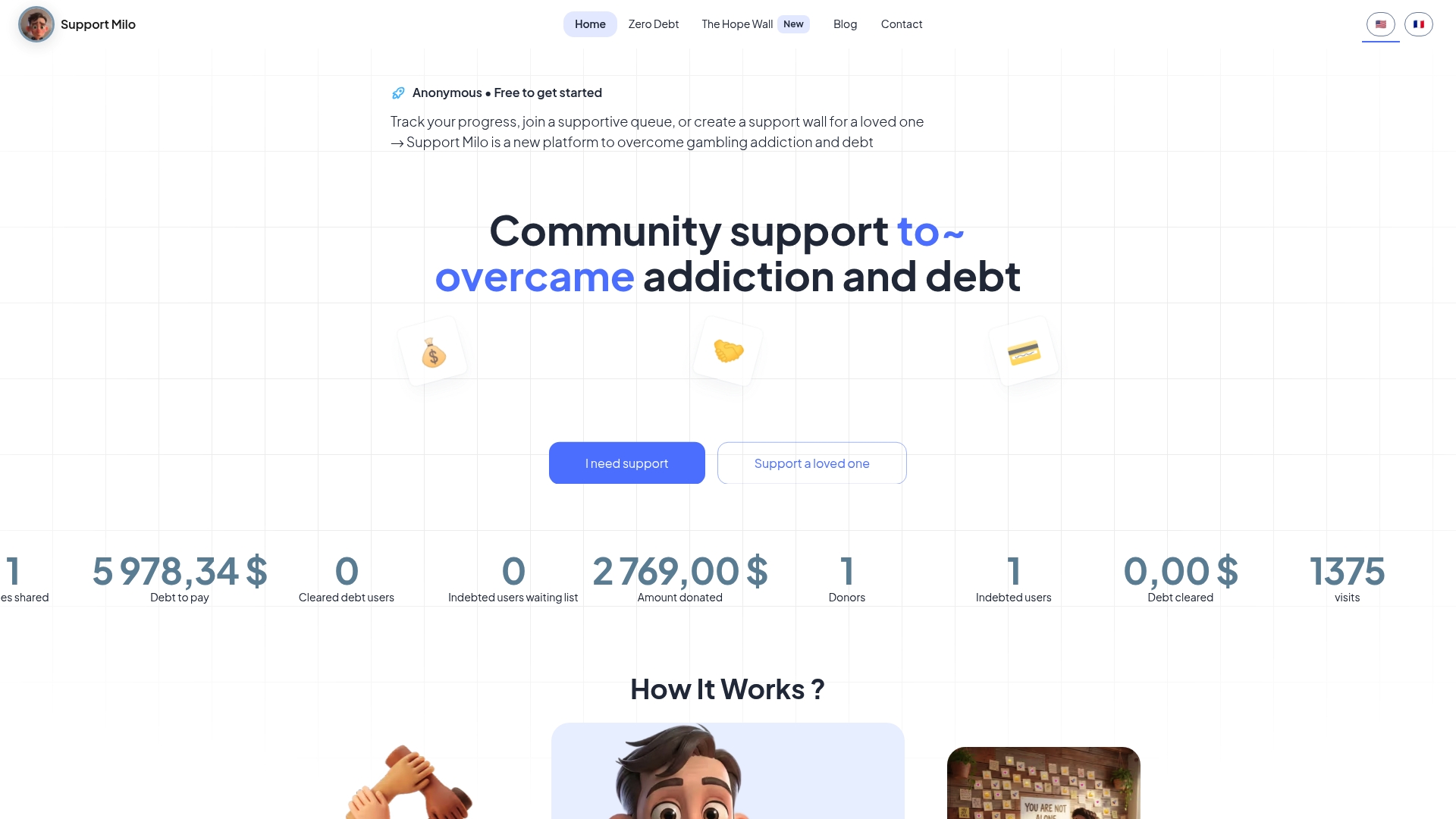
Support Milo is built for exactly this moment. Whether you're just starting to face your situation or you're weeks into your recovery and need fresh accountability, the community here walks alongside you. From community program enrollment that keeps you engaged and supported, to a debt support platform where you can track your progress and watch real numbers move, every feature is designed with your recovery in mind. The Hope Wall, peer stories, and shared milestones remind you that you're not doing this alone. Explore all support resources and take your next step today.
Frequently asked questions
What is the first thing I should do after a gambling loss relapse?
Tell a trusted person right away, increase your barriers to accessing gambling, and return to your support group as soon as possible. Recommended responses emphasize immediate action, quick disclosure to a safe person, and returning to support promptly.
Do I need to see a therapist, or can peer and community support be enough?
Both therapy and peer support are valuable, and the right mix depends on your needs. Research shows that many clients benefit from just a few sessions, and community resources can be a strong primary support for many people.
How can I stop chasing losses when the urge hits?
Use delay tactics, contact a support person immediately, and switch to a replacement activity as soon as you feel the urge rising. CBT-style skills like identifying triggers and challenging "I can win it back" thinking, combined with written relapse plans, are among the most effective approaches.
Does a short or interrupted recovery program still help?
Yes, absolutely. Even brief engagement with a recovery program can make a meaningful difference. Low session attendance is common, and early motivational engagement with realistic goal-setting still produces positive outcomes for many people.