


The 2026 World Cup is coming to the USA, and the excitement is real. But so is the pressure to gamble. If you are someone who has struggled with betting, or you simply want to enjoy World Cup 2026 USA games and do not gamble, you are in the right place. This article walks you through the scale of the betting environment, the triggers to watch for, and the many ways you can soak up every moment of this tournament without placing a single bet. You deserve to celebrate soccer. You do not need to risk your wellbeing to do it.
Key takeaways
| Point | Details |
|---|---|
| Gambling pressure is high | Americans are projected to wager over $3.1 billion legally on the 2026 World Cup, making awareness critical. |
| Venues are cleaner than you think | FIFA enforces a clean venue policy banning gambling branding inside U.S. stadiums. |
| Non-gambling options are rich | Free concerts, fan hubs, and community watch parties offer genuine excitement without betting. |
| Triggers are manageable | Recognizing your personal triggers before the tournament starts is the single most protective step you can take. |
| Support is available | Communities like Support-milo exist to help you stay grounded and connected throughout the tournament. |
The gambling landscape around the 2026 World Cup
The scale of betting tied to this tournament is unlike anything the U.S. has seen before. Americans are expected to wager over $3.1 billion legally through online sportsbooks, plus an additional $2.4 billion through prediction markets. That is a staggering number, and it reflects just how deeply sports betting has embedded itself into American sports culture.
Legal sports betting has expanded rapidly across the country, with soccer now ranking among the top betting sports. Every match, from group stage to the final, will carry odds, promotions, and advertising designed to pull you in. The digital betting environment is especially aggressive. You will see ads on social media, in sports apps, and on TV broadcasts throughout the tournament.
Here is what the betting ecosystem looks like heading into 2026:
- Online sportsbooks are legal in the majority of U.S. states and are actively marketing to new users with sign-up bonuses timed to the tournament.
- Prediction markets like Kalshi and Polymarket offer event contracts that function similarly to gambling but operate under different regulations, making them easy to stumble into.
- FIFA's data partnerships mean that betting opportunities are embedded in even minor matches, not just the high-profile games.
- Social pressure from friends, coworkers, and online communities can normalize betting in ways that feel harmless at first.
There is one meaningful protection at the stadium level. FIFA enforces a clean venue policy that removes all gambling branding from inside and around U.S. World Cup venues. That is genuinely good news if you plan to attend games in person. The challenge is that offsite and digital betting remains aggressively promoted everywhere else.
| Environment | Gambling exposure level | What to expect |
|---|---|---|
| Inside U.S. stadiums | Low | No sportsbook logos or ads due to FIFA's clean venue policy |
| TV broadcasts | High | Frequent betting odds, sponsor ads, and in-broadcast promotions |
| Social media | Very high | Targeted ads, influencer promotions, and peer betting content |
| Prediction market apps | Moderate to high | Betting-like contracts with different regulatory framing |
Recognizing your personal gambling triggers
Knowing that the environment is saturated with betting content is one thing. Knowing how you personally respond to it is where real protection begins. Gambling triggers during major tournaments are often subtle, and they build gradually.
Here are the most common patterns to watch for:
- The "just this once" thought. Major events feel like exceptions. Your brain may tell you that betting on the World Cup is different from your usual gambling. It is not.
- Social pressure from groups. Watch parties, coworker pools, and group chats can create a sense that everyone is betting. This social normalization is one of the strongest triggers.
- Emotional highs and lows. A stunning goal or a heartbreaking loss can spike your emotional state in ways that lower your resistance to impulsive decisions.
- Boredom between matches. The tournament runs for weeks. Slow days between games can create restlessness that betting seems to fill.
- Advertising exposure. Repeated exposure to odds and promotions creates what experts describe as manufactured thrills, a false sense that the game is more exciting with money on it.
The key insight here is that these triggers are not signs of weakness. They are predictable psychological responses to a high-stimulation environment. Recognizing them before the tournament starts gives you a real advantage.
Pro Tip: Write down your top two or three personal triggers before the World Cup begins. Keep that list somewhere visible during the tournament. Awareness is your first line of defense, and naming your triggers out loud takes away some of their power.
If you want deeper support around the emotional side of this, reading about gambling relapse prevention before the tournament can help you build a clearer picture of your own patterns.
Non-gambling activities and fan experiences across USA host cities
Here is the part that often surprises people. The 2026 World Cup offers an extraordinary range of fan experiences that have nothing to do with betting. The atmosphere, the community, and the sheer spectacle of the event are more than enough to make this one of the most memorable summers of your life.
The adidas-sponsored World Cup events across host cities include free concerts, public fan hubs, and community celebrations designed to bring people together around the sport itself. Here are some of the best non-gambling World Cup activities and 2026 USA soccer viewing parties to plan around:
- Peso Pluma free concert in Los Angeles. This is a flagship fan event tied to the World Cup, offering live music and celebration in one of the tournament's most vibrant host cities. No ticket required, no betting involved.
- Dog Days events in Kansas City. These pet-friendly fan events are a genuinely creative way to enjoy the tournament atmosphere with your community, including your four-legged family members.
- Public fan hubs in host cities. Cities like New York, Dallas, Miami, and Seattle are setting up large-scale public viewing areas with food, entertainment, and community programming. These are among the best places to watch World Cup USA games with real energy around you.
- Outdoor and trail viewing parties. Community-organized watch parties in parks and natural settings offer a relaxed, social way to experience the games. Communal viewing events like these have been shown to strengthen shared experience and reduce individual temptation.
- Local cultural festivals tied to participating nations. Many U.S. cities have vibrant communities connected to teams competing in the tournament. Joining a neighborhood celebration for Mexico, Brazil, or the USMNT is a deeply human way to experience the World Cup.
Pro Tip: Plan at least three specific non-gambling events before the tournament kicks off. Having something to look forward to fills the mental space that gambling urges tend to occupy. Think of it as pre-loading your calendar with joy.
The emotional connection you feel at a fan hub or a neighborhood watch party is genuine. It does not need a bet attached to it to feel real.

Strategies for staying in control during the tournament
Staying safe during the World Cup is not about white-knuckling your way through six weeks of soccer. It is about building a structure that supports you. These strategies work because they reduce friction and create positive defaults.
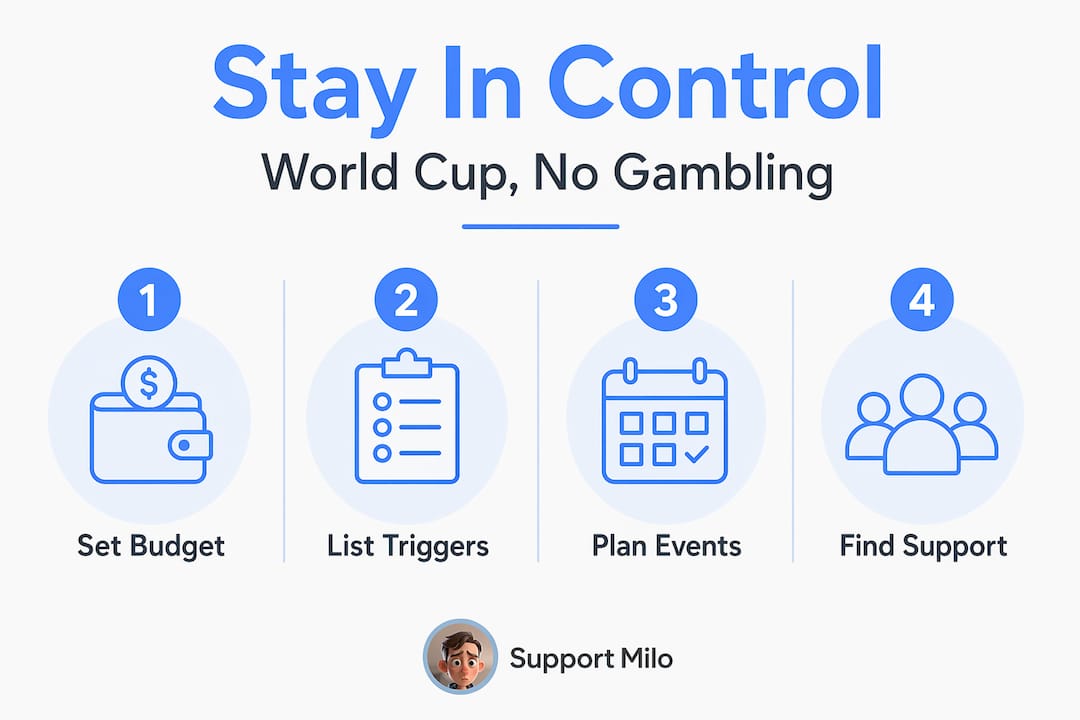
- Set an entertainment budget before the tournament starts. Decide what you will spend on food, events, and merchandise. Knowing your number removes the ambiguity that gambling tends to exploit.
- Limit your exposure to betting content. Mute or unfollow accounts that post odds. Use ad blockers on your browser. You do not have to engage with content that triggers you.
- Identify a support person. Tell someone you trust that you are committed to responsible viewing of World Cup 2026. Having an accountability partner changes the dynamic significantly.
- Be cautious with prediction markets. Platforms like Kalshi and Polymarket may not feel like gambling, but they carry similar behavioral risks and can serve as a gateway for someone in recovery.
- Use digital tools. Apps designed for habit tracking, mindfulness, or addiction recovery can help you monitor your impulses in real time during high-excitement moments.
Responsible gambling guidance consistently emphasizes one principle above all others: stop if it stops feeling like entertainment. For someone managing addiction, the safest version of that rule is to not start at all during the tournament.
If gambling stress is affecting your family relationships, the Support-milo resource on gambling family stress offers practical guidance for navigating those conversations with care.
| Strategy | Why it works |
|---|---|
| Pre-set entertainment budget | Removes financial ambiguity that gambling exploits |
| Mute betting content | Reduces trigger exposure before urges build |
| Accountability partner | Social commitment increases follow-through |
| Avoid prediction markets | Eliminates a subtle but real relapse risk |
| Plan non-gambling events | Fills emotional space with genuine positive experiences |
My honest take on watching the World Cup without gambling
I have talked with a lot of people who believe that betting makes soccer more exciting. I understand why they think that. When you have money on a match, every pass feels loaded, every near-miss feels electric. But here is what I have learned: that feeling is not about the soccer. It is about the dopamine spike from financial risk. The sport itself, the skill, the drama, the human stories, is already extraordinary. You are not missing anything by removing the bet.
What I have seen work, time and again, is replacing the gambling ritual with a different ritual. Cooking a meal from the country playing. Watching with people who care about the game, not the odds. Tracking your favorite team's stats for the joy of it. These things build real emotional memories. A bet you won does not stay with you the way a shared moment with your community does.
The misconception I want to challenge most is the idea that you need gambling to have skin in the game. You already have skin in the game. You love soccer. You care about the outcome. That is enough. More than enough. The World Cup 2026 USA games are a once-in-a-generation event, and you deserve to experience them fully, without the shadow of a gambling urge hanging over every match.
— Milo
You do not have to face this alone
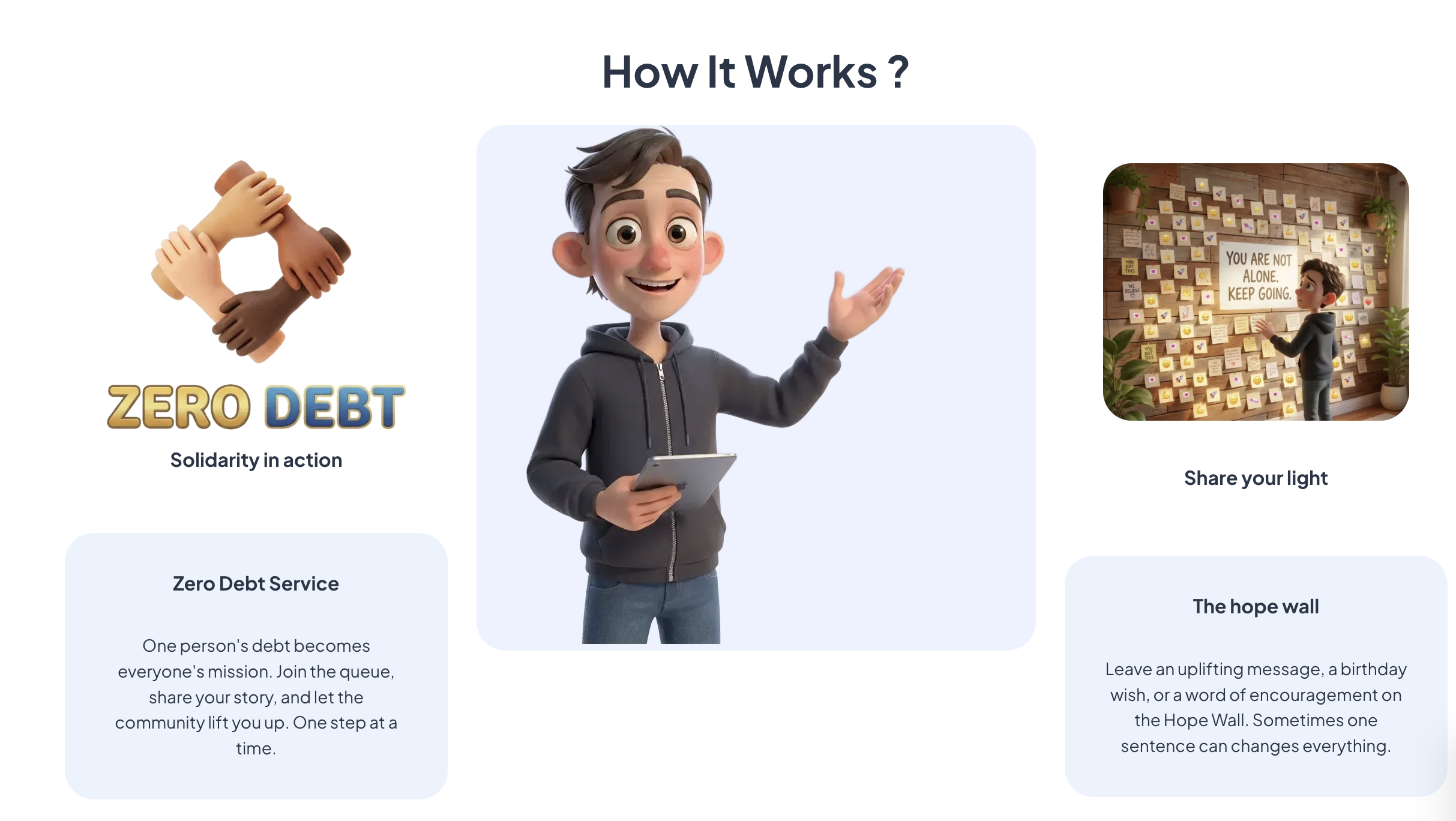
The 2026 World Cup is a high-risk period for anyone managing a gambling addiction, but it does not have to be a setback. Support-milo is a community-driven platform built for exactly this kind of moment. Whether you are looking to share your story, track your progress, or simply find encouragement on a tough match day, the Support-milo community is there for you.
If gambling has created financial strain, the Zero Debt resources on the platform offer a clear path toward recovery. You can also find support through mental health organizations that specialize in addiction and behavioral recovery. Safe, joyful World Cup experiences are absolutely within reach. You just need the right people around you.
FAQ
How much gambling is expected during the 2026 World Cup in the USA?
Americans are projected to wager more than $3.1 billion legally through sportsbooks, plus $2.4 billion through prediction markets, making it the largest betting event in U.S. history.
Are there gambling ads inside World Cup stadiums in the USA?
No. FIFA enforces a clean venue policy that bans all gambling branding inside and around U.S. World Cup venues, though digital and offsite advertising remains active.
What are the best non-gambling ways to enjoy the World Cup 2026 in the USA?
Free concerts, public fan hubs in host cities, community watch parties, and cultural neighborhood events offer rich fan experiences without any betting involvement.
What should I do if I feel a strong urge to gamble during the tournament?
Contact your accountability partner immediately, step away from betting content, and reach out to a support community like Support-milo. Having a plan in place before the urge hits makes a significant difference.
Are prediction markets like Kalshi the same as gambling?
They are structured differently from traditional sportsbooks, but prediction markets carry similar behavioral risks and can be a real relapse trigger for people managing gambling addiction.