


Think about the last time you told yourself, "Things will never change." That thought feels honest in the moment, but it's actually one of the most damaging beliefs you can carry. Learning to believe on changes, which psychologists often call growth belief or a change mindset, is not about blind optimism. It's about building the internal foundation that makes every step forward possible. Whether you're working through gambling addiction, drowning in debt, or just trying to rebuild your sense of self, this guide will show you exactly how belief works and how to grow it.
Key Takeaways
| Point | Details |
|---|---|
| Belief shapes behavior | Your beliefs about change directly influence whether you take action or stay stuck. |
| Barriers are normal | Emotional fatigue and self-doubt are common obstacles, not signs you're failing. |
| Community multiplies belief | Shared vulnerability and peer support dramatically strengthen your trust in progress. |
| Small wins rebuild self-trust | Consistent, small actions are more effective than waiting for a dramatic turning point. |
| Belief is a daily practice | Trusting in transformation is not a one-time decision. It's something you tend to every day. |
Why believing on changes starts inside your mind
Before you can change a habit, a financial pattern, or a relationship with gambling, something has to shift in how you see yourself. That shift begins with belief. This is not just motivational language. questioning whether change is possible is actually the critical first step for sustained transformation, especially in addiction recovery.
Your beliefs act like a filter. They shape what you attempt, how long you persist, and how you interpret setbacks. If you believe change is for other people but not for you, your brain will find evidence to confirm that story every single day. This is called confirmation bias, and it is one of the most powerful forces working against your growth.
Here is what makes the difference:
- Identity beliefs: These are the deepest ones. "I am an addict." "I am bad with money." They feel like facts, but they are stories that can be rewritten.
- Process beliefs: "I can learn to manage this." "Recovery takes time, and that's okay." These create the runway for sustained effort.
- Outcome beliefs: "A better life is possible for me." Without this, there is no motivation to start.
"True transformation blossoms where change intersects with emotional acceptance, moving resistance into resilience." — embracing change
Research confirms that people-related actions drive 70% of the value in successful transformations. Technology, money, or information alone do not move the needle. What moves the needle is how you think and feel about the process.
Pro Tip: Write down one belief you currently hold about your ability to change. Then ask yourself, "What would I have to believe instead for progress to feel possible?" That second answer is your new starting point.
Common barriers to faith in change
Here is the hard truth. Over 80% of people who make resolutions eventually give up, and the reason is rarely lack of information. It is emotional fatigue. It is the quiet voice that says, "Why bother trying again?"
Understanding those barriers makes them less powerful. Think of it like turning on the lights in a dark room. The obstacles were always there. Now you can actually see them and step around them.
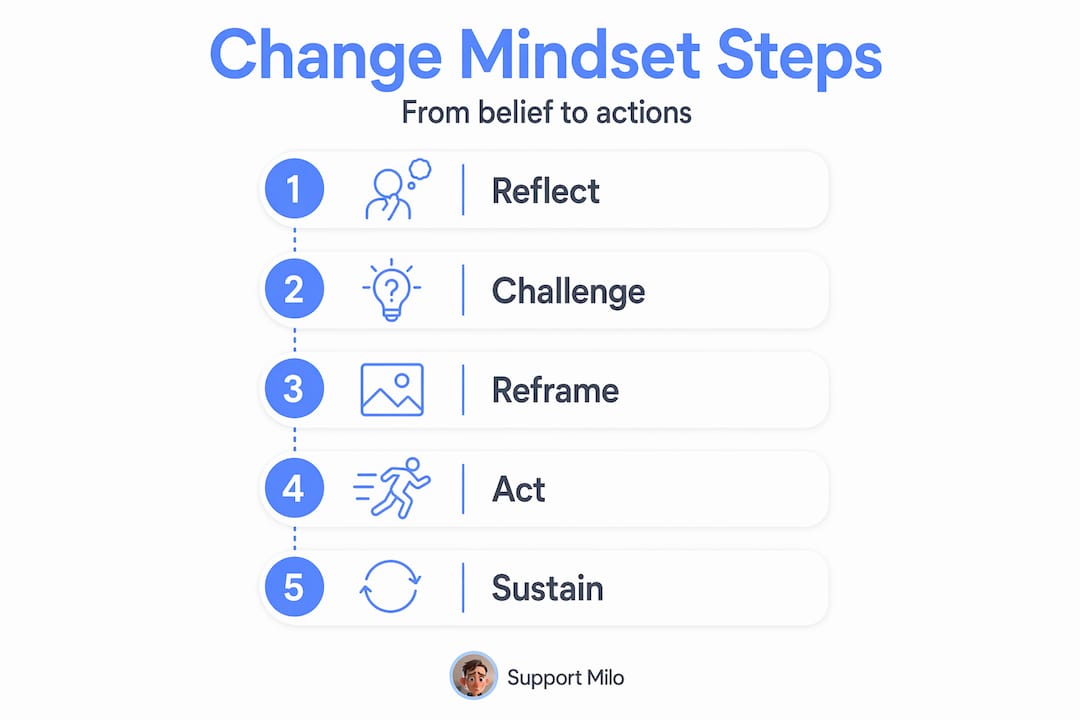
The five most common barriers people face when embracing change are:
- Emotional exhaustion from past failures. Every time you tried and didn't follow through, your self-trust took a small hit. Over time, those hits add up. The solution is not trying harder. It is rebuilding trust through tiny, repeatable wins.
- The discomfort of the "in-between." Resistance often comes from transitional discomfort, not from the goals themselves. The phase between who you were and who you are becoming is uncomfortable. That discomfort is not a warning sign. It is a sign that real change is happening.
- Limiting beliefs disguised as realism. "I've always been this way." "My family has always struggled with money." These sound like honest observations, but they are beliefs, and beliefs can be investigated and challenged.
- Lack of visible progress. When you cannot see results, faith in change starts to erode. Tracking even microscopic progress, like one day without gambling or one week sticking to a budget, keeps motivation alive.
- Isolation. Facing addiction or debt alone amplifies shame. Shame fuels avoidance. Avoidance blocks change. Connection breaks that cycle.
Pro Tip: When you notice a limiting belief, try asking: "Is this 100% true, all the time, in every situation?" That one question creates just enough space to start thinking differently.
Accepting new beginnings does not mean pretending the past did not happen. It means choosing not to let the past write the script for what comes next. That choice is available to you right now.
How community and trust supercharge your belief
You do not have to figure this out alone. In fact, the research is clear that trying to change in isolation puts you at a significant disadvantage.
Only 19% of employees trust their leaders, and that statistic reveals something important. When trust is low, people stop taking risks. They stop trying. The same dynamic plays out in personal change. If you do not trust the process, the people around you, or yourself, change becomes nearly impossible.
What builds that trust? Three things, consistently:
- Transparency. Communities and environments where people share honestly, including their failures, create psychological safety. You stop performing recovery and start actually doing it.
- Consistent follow-through. Designing trust into transformation means making small commitments and keeping them. Every kept promise to yourself rebuilds the foundation.
- Shared vulnerability. When you hear someone say "I've been where you are," something shifts. Suddenly change feels possible because someone you can see and relate to has done it.
Here is a comparison of going it alone versus leaning into community support:
| Approach | What you experience | Long-term outcome |
|---|---|---|
| Facing change alone | Shame cycles, isolation, depleted motivation | Higher relapse rates, stalled progress |
| Community-supported change | Validation, shared accountability, renewed hope | Stronger resilience and sustained progress |
Meaningful work provides the human infrastructure needed to sustain belief during difficult transitions. For individuals in recovery, "meaningful work" might mean sharing your story with others who need to hear it, or contributing to a community that helped you. That sense of purpose is not a luxury. It's fuel.
Nonprofits and community platforms that use social proof to build trust show something important: seeing real people succeed is one of the most reliable ways to strengthen your own faith in change.
Practical steps to build your mindset for change
Belief is not something you either have or don't have. It is something you build. Think of it less like a light switch and more like a muscle. The more you use it, the stronger it gets.
- Start with one small, daily action. Lasting change builds from small, consistent actions, not from dramatic restarts. If you are working on financial recovery, that might mean logging one expense today. Just one.
- Practice mindfulness to catch your own thoughts. You cannot challenge a belief you are not aware of. Spend five minutes each morning simply noticing what thoughts arise around change. Write them down without judgment.
- Ask better questions. Instead of "Why can't I change?", try "What is one small thing I could do differently today?" The first question closes doors. The second opens them.
- Celebrate what you did, not just what you didn't do. If you made it through the day without gambling, that is a real win. Acknowledge it out loud, in writing, or by sharing it with someone who gets it. Your brain releases dopamine when progress is recognized, and that dopamine reinforces the behavior.
- Reframe setbacks before they become stories. A relapse, a missed payment, or a hard day is data, not a verdict. Ask, "What can I learn from this?" rather than "See? I knew I couldn't do it."
- Connect with others who are further along. Knowing that recovery from gambling addiction and debt is genuinely achievable changes how you approach your own path. You can find real stories and guidance on rebuilding after addiction that remind you that people do, in fact, get through this.
Pro Tip: Keep a one-sentence daily log: "Today I ______." No need for paragraphs. Just one line of evidence that you showed up. After 30 days, read it back. You'll be surprised what you've already built.
Supporting personal growth does not require perfection. It requires showing up, imperfectly but consistently, and choosing to believe that today's effort matters.
My honest take on believing in transformation
I've sat with a lot of people who've lost faith in themselves. What I've noticed is this: the biggest barrier is almost never willpower. It's the belief that they are fundamentally different from people who succeed. That their situation is too messy, too far gone, too complicated.
In my experience, that belief is the lie that does the most damage. I've seen people with enormous debt and years of gambling behind them turn things around, not because they found some perfect strategy, but because someone helped them see that change was worth attempting. That shift from "I can't" to "maybe I can" is where everything starts.
What I've also learned is that skepticism about change is natural. You are not broken for doubting yourself. Sustained belief requires deliberate investigation and ongoing practice. You have to keep choosing it. Some days that looks like reading a story from someone who made it through. Other days it looks like getting through a hard afternoon without a relapse. Both count.
The most practical thing I can tell you is this: do not wait until you fully believe before you take action. Take the action, and let the belief follow. It almost always does.
— Milo
Start your transformation with Support-milo
If anything in this article landed for you, the next step is not complicated. You just need a place to take it.
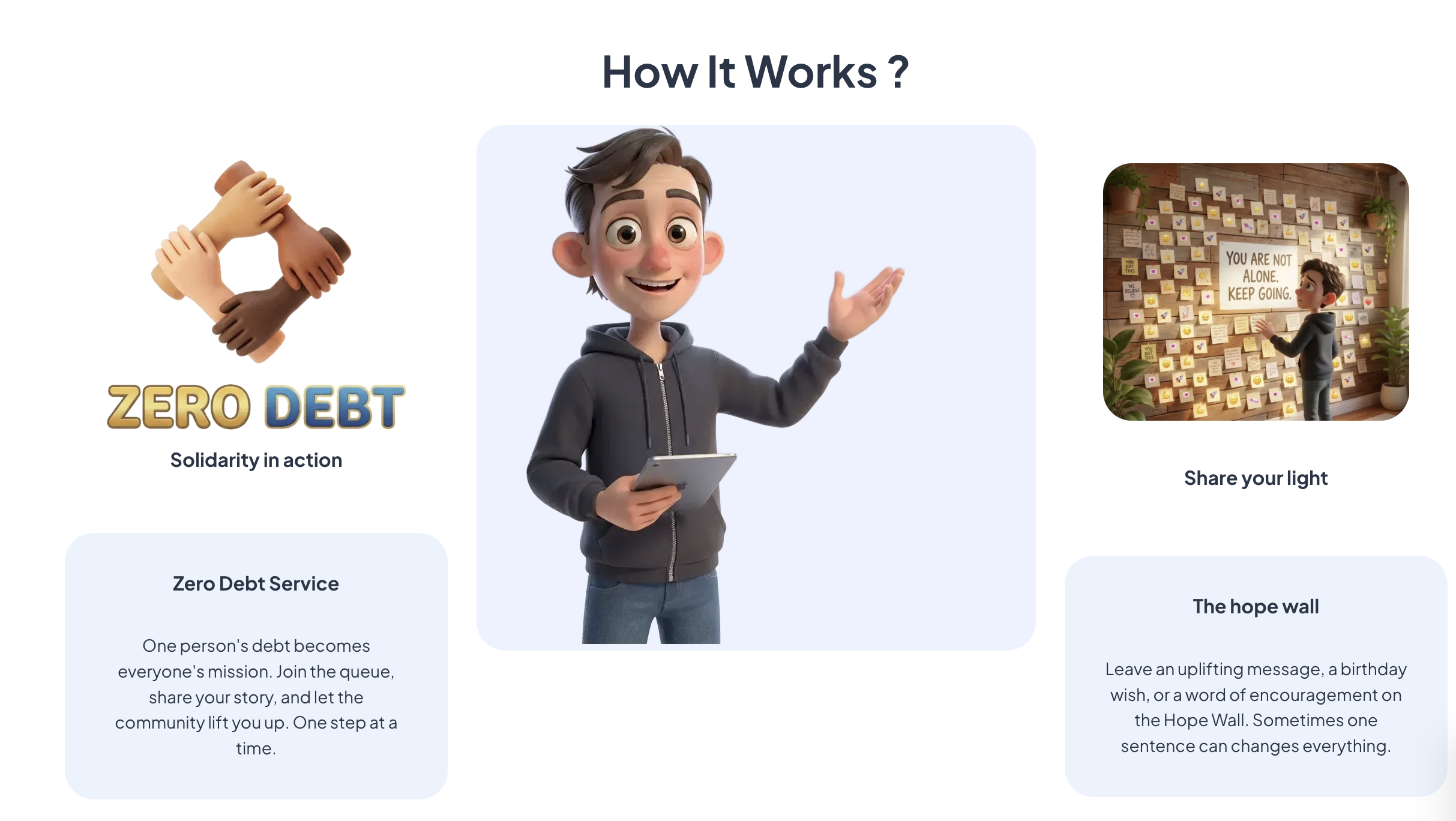
Support-milo was built for exactly where you are right now. It's a community-driven platform where people overcoming gambling addiction and managing debt come together to share real stories, track progress, and lift each other forward. The Hope Wall is a space where you can post encouraging messages or simply read what others are feeling. It is warm, honest, and real.
If financial recovery is part of your path, the Zero Debt program gives you tools to track what you owe and mark every milestone as you clear it. For organizations and teams supporting people through change, Support-milo Enterprise offers structured resources designed around emotional resilience and peer support. You do not have to start with a big leap. Just start.
FAQ
What does it mean to believe on changes?
Believing on changes means holding a genuine conviction that personal transformation is possible for you, not just in theory but in your own life. It's the psychological foundation that motivates sustained effort, especially during setbacks in addiction recovery or financial rebuilding.
How do I start trusting in transformation when I've failed before?
Start with one small kept promise to yourself, not a major overhaul. Small consistent actions rebuild self-trust more effectively than dramatic new beginnings, because each completed action becomes evidence that you can follow through.
Is it normal to feel fear and doubt when embracing change?
Absolutely. Emotional cycles through fear and uncertainty are natural phases of change and should be acknowledged rather than suppressed. Feeling afraid does not mean you are doing it wrong. It often means you are doing it right.
How does community help me believe in progress?
Human-centered transformation is 2.6 times more likely to succeed than going it alone. Peer support and shared stories create psychological safety, reduce shame, and show you concrete proof that recovery is real and achievable.
Can belief in change help with gambling addiction and debt?
Yes. Overcoming gambling shame and guilt requires shifting the beliefs that keep you stuck in avoidance. When you start to believe that a different outcome is possible, you become far more likely to take the practical steps, like debt tracking or seeking support, that make it real.