


When gambling addiction takes hold in a household, the gambling addiction family financial impact rarely announces itself loudly. It creeps in through unexplained withdrawals, borrowed money with vague explanations, and savings accounts that seem to shrink without reason. Compulsive gambling disorder, as clinicians formally call it, does not just harm the person at the table or screen. Research confirms that gambling harm extends well beyond the gambler to partners, children, and close relatives at a measurable population level. This article breaks down what families actually experience, what to do about it, and where to turn for help.
Key takeaways
| Point | Details |
|---|---|
| Financial harm builds silently | Small repeated transactions, overdrafts, and secret accounts are early warning signs families often miss. |
| Relationships suffer alongside finances | Trust erosion, secrecy, and stress in couple dynamics can worsen the disorder if left unaddressed. |
| Protect accounts immediately | Securing bank accounts and monitoring credit reports early limits long-term financial damage significantly. |
| Evidence-based therapies work | Cognitive-behavioral therapy and family-focused psychoeducation improve both recovery and financial outcomes together. |
| Community support accelerates healing | Families do not need to recover alone; platforms like Support-milo offer shared tools and hope. |
How gambling addiction affects family finances
The clinical term is gambling disorder, and its financial consequences can be staggering. What most families notice first are small oddities. An overdraft that doesn't quite make sense. A credit card statement with charges nobody recognizes. A savings account that went from reassuring to alarming in just a few months.
These patterns follow a predictable escalation. Financial harm patterns typically include repeated small transactions, overdrafts, new credit lines opened without discussion, secret accounts, and the quiet disappearance of valuables. Each one signals financial desperation growing beneath the surface.
Here is what families commonly report as early financial red flags:
- Unexplained withdrawals: Cash pulled from ATMs in amounts that don't match any household need
- New credit accounts: Cards or loans opened secretly, often maxed out quickly
- Missing bills: Utilities, mortgage, or rent payments falling behind without explanation
- Borrowed money: Requests from friends or relatives framed around emergencies
- Sold possessions: Electronics, jewelry, or other items quietly disappearing from the home
The severity these patterns can reach is striking. About 18% of treatment-seeking pathological gamblers have declared bankruptcy, carrying average debts around $33,000. Many lost homes. Many more borrowed from family members who never saw that money returned.
| Financial red flag | What it may indicate |
|---|---|
| Repeated small ATM withdrawals | Funding gambling sessions without drawing attention |
| Multiple overdraft fees | Gambling losses draining accounts faster than income arrives |
| Secret credit cards or loans | Hiding the true scale of debt from family members |
| Missing bill payments | Money redirected to gambling rather than household obligations |
| Sudden sale of valuables | Financial desperation after losses have accumulated significantly |
Pro Tip: If you notice two or more of these red flags at the same time, start keeping a written log with dates and amounts right away. Early documentation is far more useful than waiting until the full picture becomes clear, and it can protect you legally and financially down the road.
Understanding why loved ones hide gambling debts can help you respond without panic. Secrecy is not just dishonesty. It is often shame driving a very human response to a disorder that has taken control.
Emotional toll on family relationships
Money problems do not exist in a vacuum. When the financial effects of gambling addiction ripple through a household, they carry a heavy emotional current alongside them.
Partners experience betrayal, confusion, and anxiety in cycles. Children sense the tension even when adults believe they are shielding them. Extended family members who lent money often feel deceived and angry. These reactions are all completely normal, and they are well documented. Gambling disorder affects partners through financial instability, distress, and a disorienting breakdown of trust that needs active, skilled repair.
What makes the emotional impact uniquely difficult is the secrecy layer. The person gambling often uses denial as a coping mechanism, which pushes their family into their own form of denial. Family members may make excuses, cover up debt, or avoid confronting the issue because the truth feels too overwhelming. This pattern is recognized clinically, and secrecy actively shapes how families seek help or avoid it entirely.
Research on couple dynamics adds another dimension. Dysfunctional couple patterns both contribute to and worsen gambling disorder over time, meaning the relationship itself becomes part of the cycle. This is not about blame. It is about understanding that healing the relationship is not separate from healing the addiction. They work together.
"Families impacted by gambling disorder deserve both empathy and practical tools. Psychoeducation and communication skills training give concerned family members the ability to navigate financial and emotional chaos with far greater resilience."
Learning how to cope with gambling family stress effectively is one of the most underused tools available to families right now. You do not have to figure out the emotional side alone, and you certainly do not have to wait until recovery is complete before addressing it.
Protecting your finances right now
If you are in the middle of a gambling crisis at home, stabilizing the household finances is the most concrete thing you can do today. Think of it as stopping the bleeding before you plan the surgery.
Here is a step-by-step approach that practitioners recommend:
- Secure your individual accounts. Move your personal funds to an account only you can access. Change passwords, PINs, and linked email addresses immediately.
- Review your joint accounts. Understand exactly what is in them, what has left them, and over what time frame. Contact your bank about your options for restricting access.
- Pull your credit reports. Check for accounts, loans, or hard inquiries you did not authorize. In the United States, you can access reports through AnnualCreditReport.com for free.
- Document everything. Early timeline documentation of gambling-related financial harm is one of the highest-leverage steps a family can take. Create a log of suspicious transactions with dates, amounts, and context.
- Separate bills and obligations. Where possible, take over direct responsibility for critical household payments like rent or mortgage, utilities, and insurance.
- Build a small emergency fund. Even a few hundred dollars set aside in an account only you control provides a safety net if finances deteriorate further.
- Consult a financial counselor. A professional who understands compulsive behavior and debt can help you create a realistic plan without judgment.
Immediate financial risk controls like these are not punitive. They are protective. And they actually support treatment success by stabilizing the household during the most vulnerable relapse-risk windows.
Pro Tip: Do not wait for the transactions to "make sense" before acting. Families who delay protective steps while seeking certainty often lose years of financial stability. Trust the pattern, not the explanation.
You can also explore guidance on managing shared debt from gambling to understand your rights and options when debt is entangled between both partners.
Long-term recovery and family support approaches
Once the immediate financial fire is contained, the longer work of recovery begins. The good news? There are evidence-based approaches that work, and families play a central role in them.
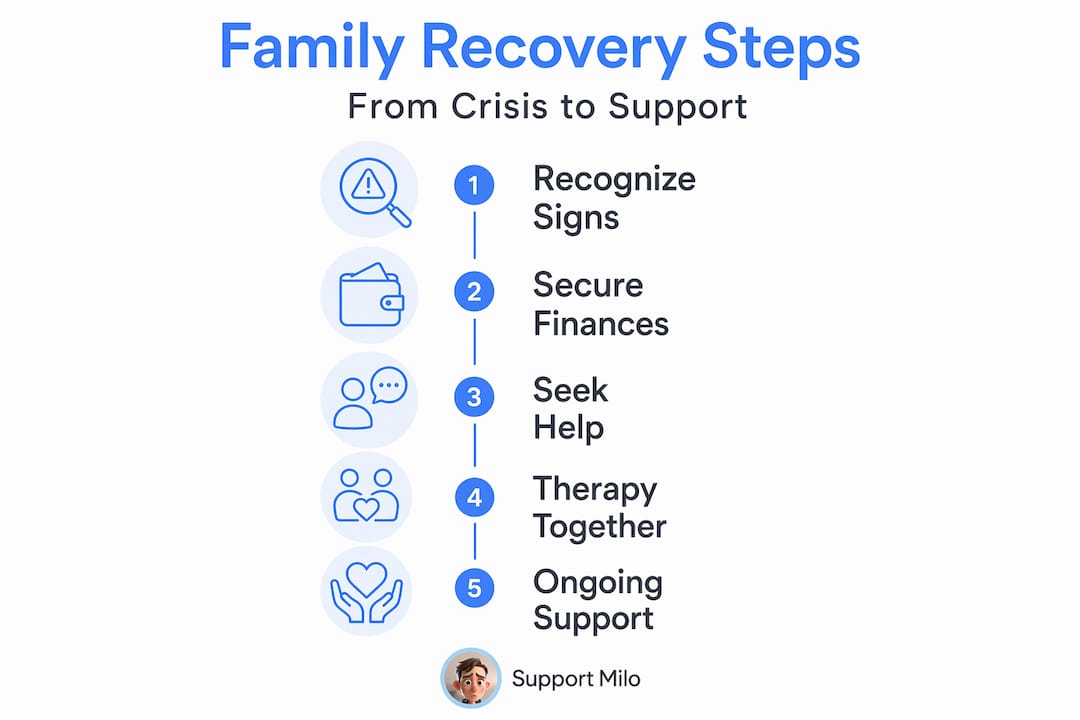
For the person who gambles, cognitive-behavioral therapy (CBT) remains one of the most effective tools available. It targets the distorted thinking patterns that fuel continued gambling despite devastating losses. Motivational interviewing helps those who are still ambivalent about change find their own internal reasons to stop.
For families, the picture is more nuanced. Here are the approaches with the strongest evidence:
- Family and couple therapy: Addresses the relational damage alongside the behavioral one. Research shows that couple dynamics play a role in both the progression and recovery from gambling disorder, making joint treatment a powerful option.
- Psychoeducation for concerned significant others (CSOs): This approach teaches family members about addiction, its behavioral patterns, and how their own responses can either support recovery or unintentionally sustain the cycle.
- Skills-based training: Treatment for CSOs includes ongoing assessment, emotional processing strategies, and communication tools that directly address relational repair alongside financial rebuilding.
- Disclosure navigation: Clinicians recommend balancing empathy with accountability when families address financial misconduct. How you have these conversations affects trust and recovery trajectories in lasting ways.
| Support approach | Primary benefit | Best for |
|---|---|---|
| Cognitive-behavioral therapy | Addresses distorted thinking and impulse patterns | The person with gambling disorder |
| Family and couple therapy | Rebuilds trust and relational communication | Couples and immediate family |
| Psychoeducation for CSOs | Teaches family members to support without enabling | Partners, parents, adult children |
| Financial counseling | Creates structured debt and budget plans | Families managing shared financial harm |
| Community support platforms | Provides peer connection, hope, and accountability | Anyone in the recovery ecosystem |
Recovery is not a single event. It is a process, and families who treat it as such tend to fare far better over time. Understanding gambling relapse patterns and how to respond to them is part of that preparation, not a sign that something has gone wrong.
My perspective on what families really need to hear
I've seen a lot of families arrive at the point of crisis already exhausted, already blaming themselves for not catching it sooner. What I've learned is that the delay is almost never negligence. It is the nature of the disorder itself. Financial harm from compulsive gambling is designed, by the addiction's own logic, to stay hidden until it cannot.
What I believe changes outcomes is this: act on suspicion, not certainty. The families who document early, secure accounts before the conversation even happens, and reach out for support while things are still unclear are the ones who protect the most. Waiting for a confession rarely helps and often costs thousands more.
I've also found that the couples and families who heal the fastest are the ones who approach this as a shared problem rather than a personal betrayal alone. That framing does not dismiss the very real pain of being deceived. It simply makes space for the work of rebuilding. Compassion and firm financial boundaries are not opposites. You can hold both at once.
If there is one shift I'd encourage every family to make right now, it is to stop thinking of education and skills-based support as something you pursue after the crisis. They are what help you survive the crisis. Reach out, get informed, and give yourself permission to ask for help at the same time you are helping someone you love. Overcoming gambling shame and guilt is part of that process for the whole family, not just the person who gambled.
— Milo
How Support-milo can help your family recover
If your family is carrying the weight of gambling-related debt and emotional stress, you do not have to carry it alone.
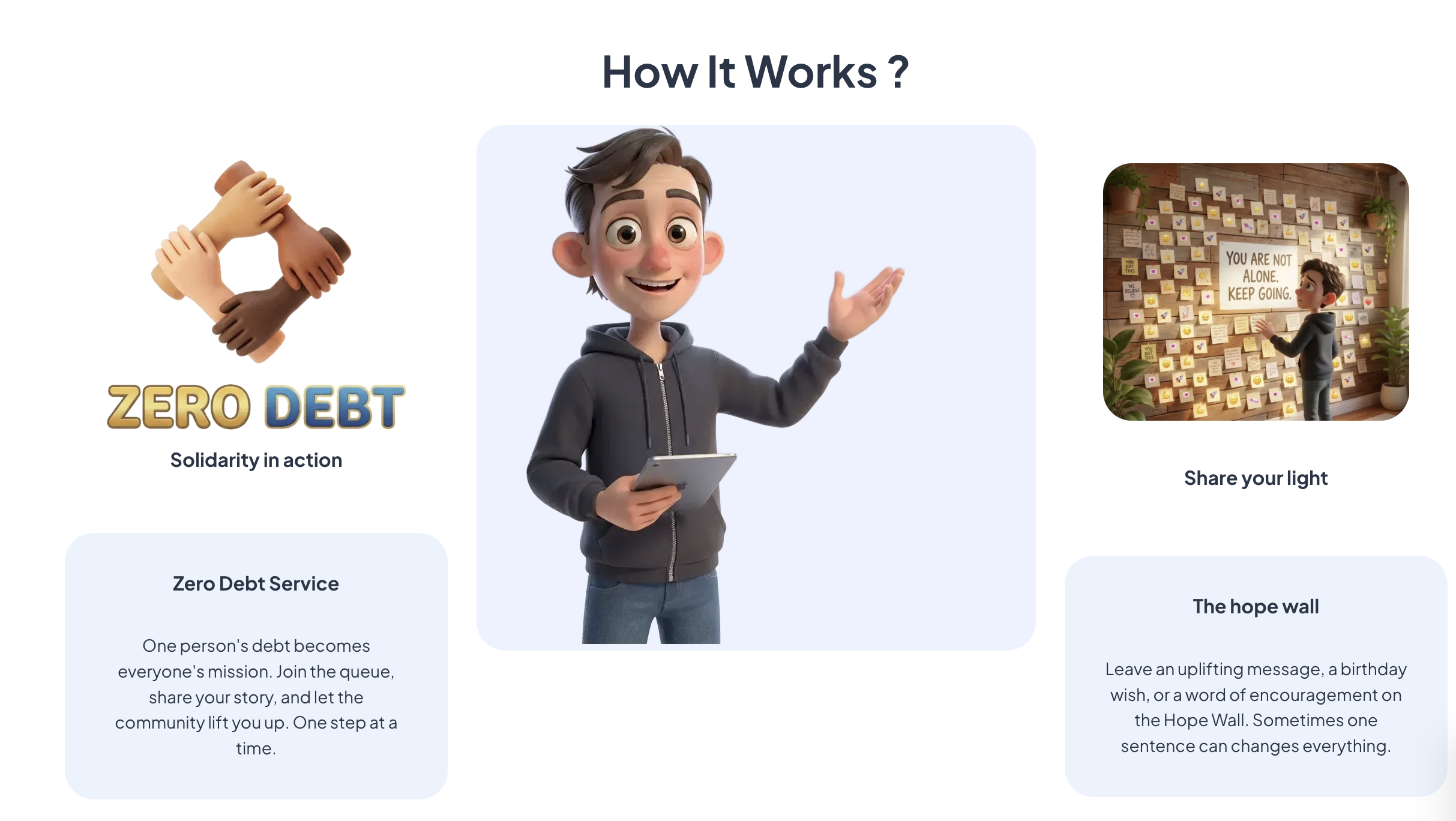
Support-milo is a community-driven platform built specifically for people navigating gambling addiction and its financial aftermath. Whether you are the person who gambled or the family member trying to hold things together, Support-milo offers real tools: debt tracking, community stories from people who have been where you are, and a Hope Wall filled with messages from others who chose to keep going. Families can explore the Zero Debt program for structured debt relief support, or access enterprise-level resources designed for deeper financial and emotional recovery. You deserve a community that understands. Come find it.
FAQ
What are the financial effects of gambling addiction on families?
The financial effects include drained savings, accumulated debt, missed bill payments, secret credit accounts, and in severe cases, bankruptcy. About 18% of treatment-seeking gamblers have declared bankruptcy with average debts around $33,000.
How can a family protect itself financially during a gambling crisis?
Start by securing individual accounts, changing passwords, monitoring credit reports, and documenting suspicious transactions with dates and amounts. Stabilizing household finances early supports treatment success and limits further damage.
How does gambling addiction affect family relationships?
It creates cycles of secrecy, betrayal, and financial stress that erode trust between partners and create anxiety for children. Research shows that dysfunctional couple dynamics can both contribute to and worsen gambling disorder over time.
What support resources are available for families of gambling addicts?
Families benefit most from a combination of family therapy, psychoeducation programs for concerned significant others, financial counseling, and community support platforms like Support-milo that offer peer connection and debt tracking tools.
Should families tell others about a gambling problem?
Disclosure decisions are deeply personal and carry relational consequences either way. Clinicians advise balancing empathy with accountability when addressing financial misconduct, and working with a therapist to navigate how and when to share can protect both trust and recovery progress.