
.webp&w=1280&q=75)

Finding a gambling recovery community that combines real-time support, visible progress tracking, and privacy-first tools is harder than expected. Many platforms either require public identity, limit free features, or focus only on self-monitoring with no group accountability or debt coordination. This comparison shows which community-centered options address personal privacy, debt relief, and motivation so you can choose the most practical substitute for lasting gambling recovery.
Table of Contents
Support Milo
At a Glance
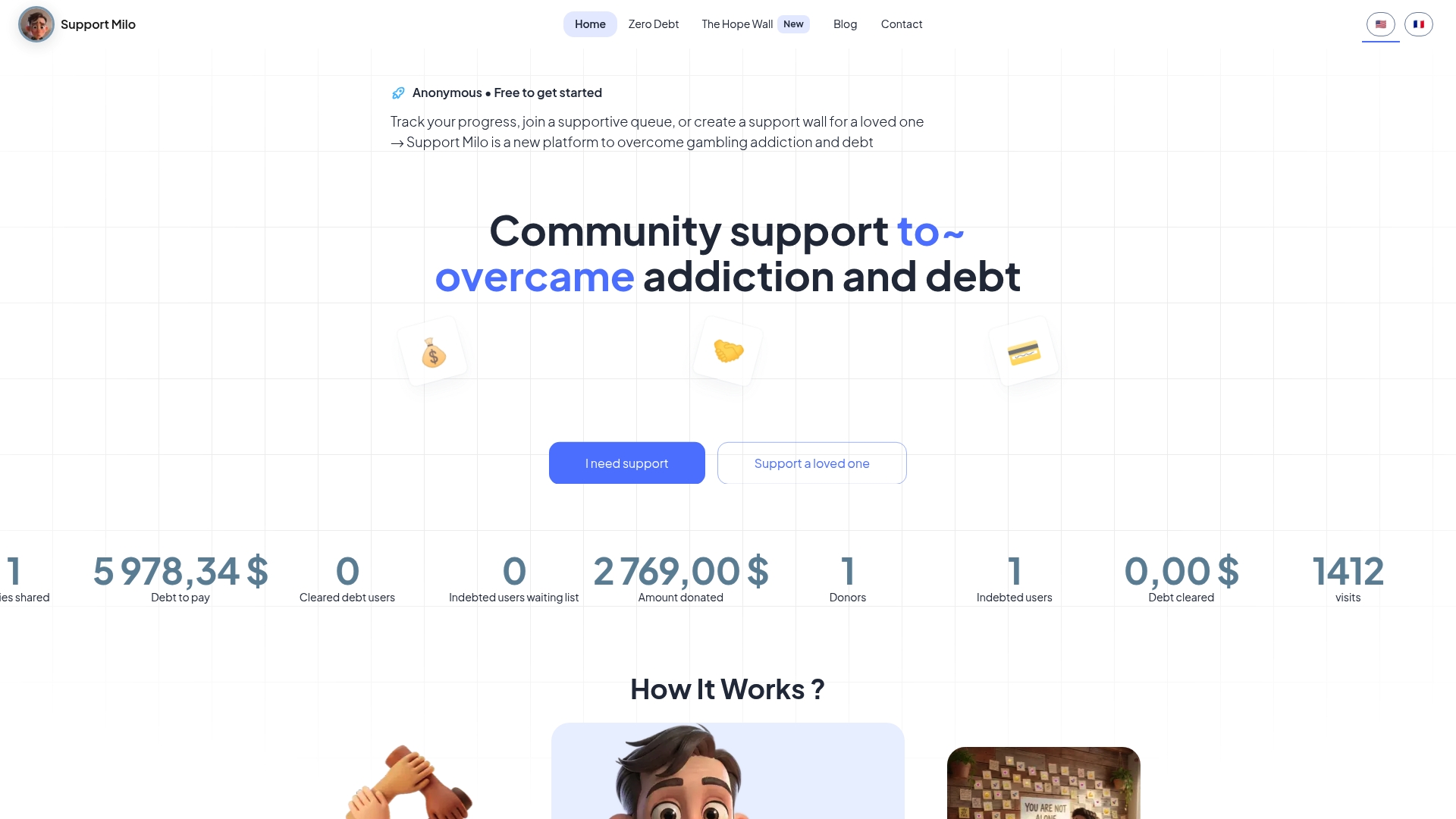
The Zero Debt Service is the platform mechanic that stands out: people can join a queue to coordinate collective debt repayment while tracking progress publicly. Support Milo also uses a visible metric layer showing amounts cleared and donations received to increase transparency.
Core Features
- Community spaces for sharing personal stories and encouragement, with anonymous participation available.
- Zero Debt Service for grouped debt-resolution efforts and a tracking feed that shows progress toward clearing debts.
- Hope Wall where members post short uplifting messages that other users can reply to and react to.
- Simple debt and recovery tracking so members can record milestones and view historical progress.
- Support flows for both individuals and loved ones, plus optional links to community chat channels such as Discord and Slack.
Key Differentiator
The product data positions community-led collective repayment as the organizing principle rather than a forum add-on. That focus shapes features, from queue mechanics to the public progress metrics, so the platform’s activity centers on group action and mutual encouragement for gambling recovery and debt relief.
Pros
- Empowers members through peer storytelling and visible progress. The combination of stories and tracking helps peers recognize small wins and sustain motivation.
- Offers specific community tools like the Hope Wall and the Zero Debt Service that turn encouragement into measurable steps toward debt reduction.
- Allows anonymous participation which lowers the barrier to entry for people worried about stigma or privacy.
- Free to start, so joining the community does not require payment and members can test engagement before committing time.
- Built for both direct sufferers and their loved ones, so family members can post support items or follow a friend’s recovery updates.
Cons
- Limited verification of debt claims or user identities; third-party commentary notes this gap, so financial assertions on the platform should be treated cautiously.
Who It's For
If you are managing gambling-related debt and want peer accountability, this platform matches that need. It also fits family members who want a structured way to offer support and people who find motivation in community milestones and public tracking.
Unique Value Proposition
The Zero Debt Service gives groups a literal mechanism to queue and coordinate contributions or matchmakers around a named debt. That creates an economics of mutual aid: individual posts move from anecdote to an actionable funding queue and visible debt reduction timeline, which changes how community help is organized.
Real World Use Case
A member posts a short account of their debt and recovery steps, opts into the Zero Debt Service queue, and marks milestones in the tracking feed. Friends leave messages on the Hope Wall and a small number of contributors coordinate to reduce a named balance while the poster retains anonymity.
Website: https://support-milo.com
NoGamble
At a Glance
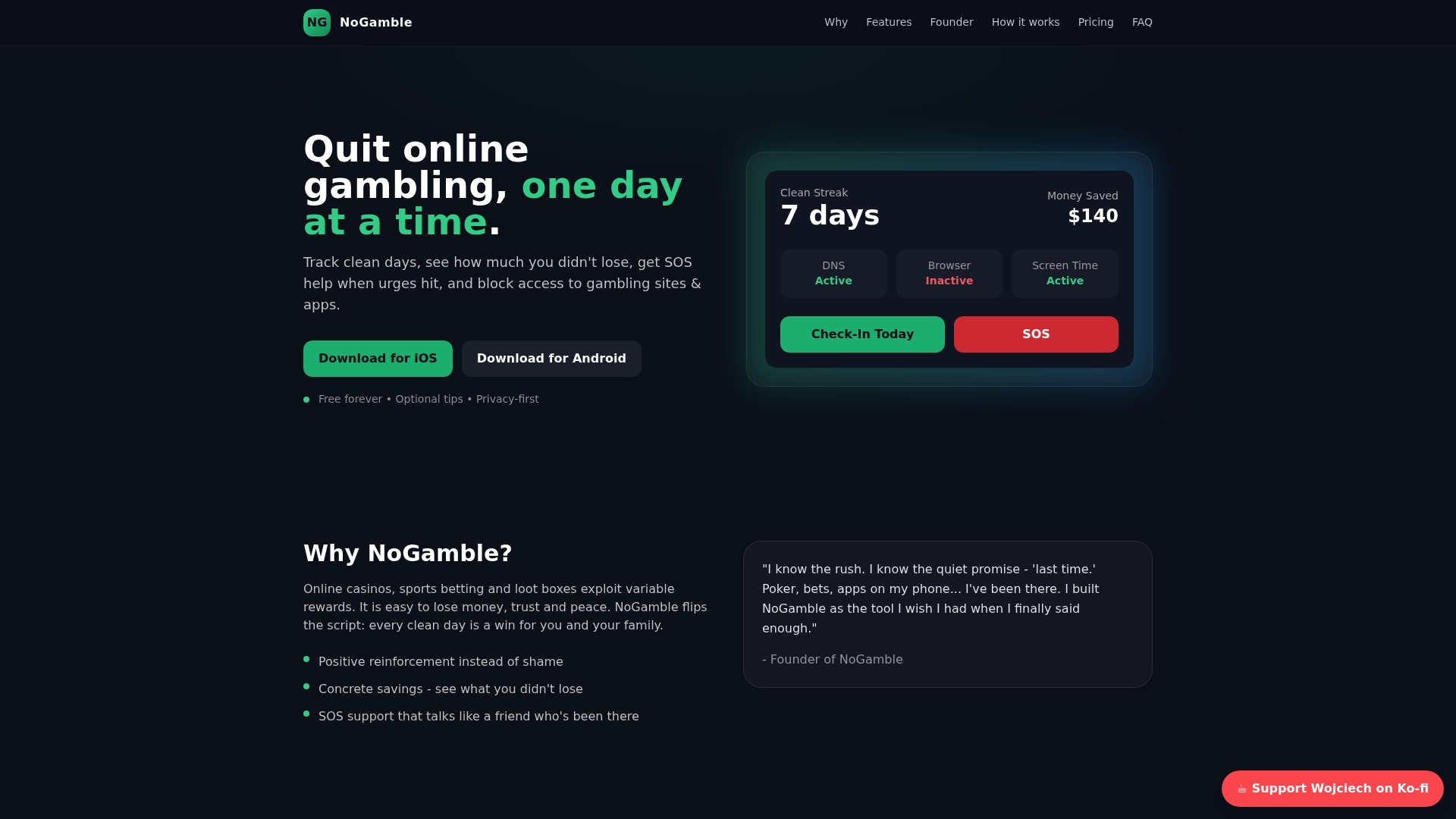
Free forever, no ads, and the app collects no personal data — a privacy-first quit gambling tool built by someone with lived experience. NoGamble focuses on simple, measurable wins like streaks and money saved to keep progress visible and motivating.
Core Features
- Daily check-in for tracking streaks and building a visible record of clean days.
- Money saved counter that converts avoided losses into a running total you can see each day.
- SOS button to contact a guardian or trusted person during strong urges for immediate support.
- Rewards and badges that use positive reinforcement rather than shame.
- Step-by-step guides for blocking gambling sites and apps on common devices and browsers without intrusive permissions.
Key Differentiator
NoGamble is built from personal experience to combine straightforward tracking with emotional scaffolding. Its emphasis on small wins, guardian-based SOS support, and a privacy promise sets it apart from apps that push telemetry or subscription upsells.
Pros
- Positive reinforcement rather than shame makes daily check-ins feel encouraging. That design choice reduces the friction of logging progress.
- Free forever removes the cost barrier that often stops people from trying new recovery tools.
- Built by someone with lived experience, which shows in the way the app prioritizes practical, habit-focused features over polished analytics.
- Supports family or guardian oversight for accountability while still respecting user privacy.
- Privacy-focused posture means the app does not collect personal data, limiting the exposure that worries many people seeking help.
Cons
- No advanced features are currently available; premium tiers and expanded functionality are under development and not yet usable.
- Integration options are limited. The app provides guidance for blocking but does not automate enterprise or router-level blocks.
- No formal therapy, coaching, or clinician-led programs are included. Users needing clinical treatment will need an additional resource.
When It May Not Fit
If you want clinician-driven programs, structured course content, or in-app professional coaching, NoGamble's tooling-only approach will feel sparse. Teams, clinics, or family groups that need shared dashboards or formal reporting will find the current feature set too lightweight.
Who It's For
People who want an immediate, low-friction way to stop or reduce online gambling. It fits individuals who respond to streaks and visual progress, those who need simple blocking guidance, and family members who want a discrete accountability option without data collection.
Real World Use Case
A user installs NoGamble, follows the browser and phone blocking guides to remove quick access to betting sites, and starts daily check-ins. When urges spike the user taps the SOS button to call a trusted friend. Over weeks the money saved counter and badges reinforce staying clean.
Website: https://nogamble.app
QuitGambl
At a Glance
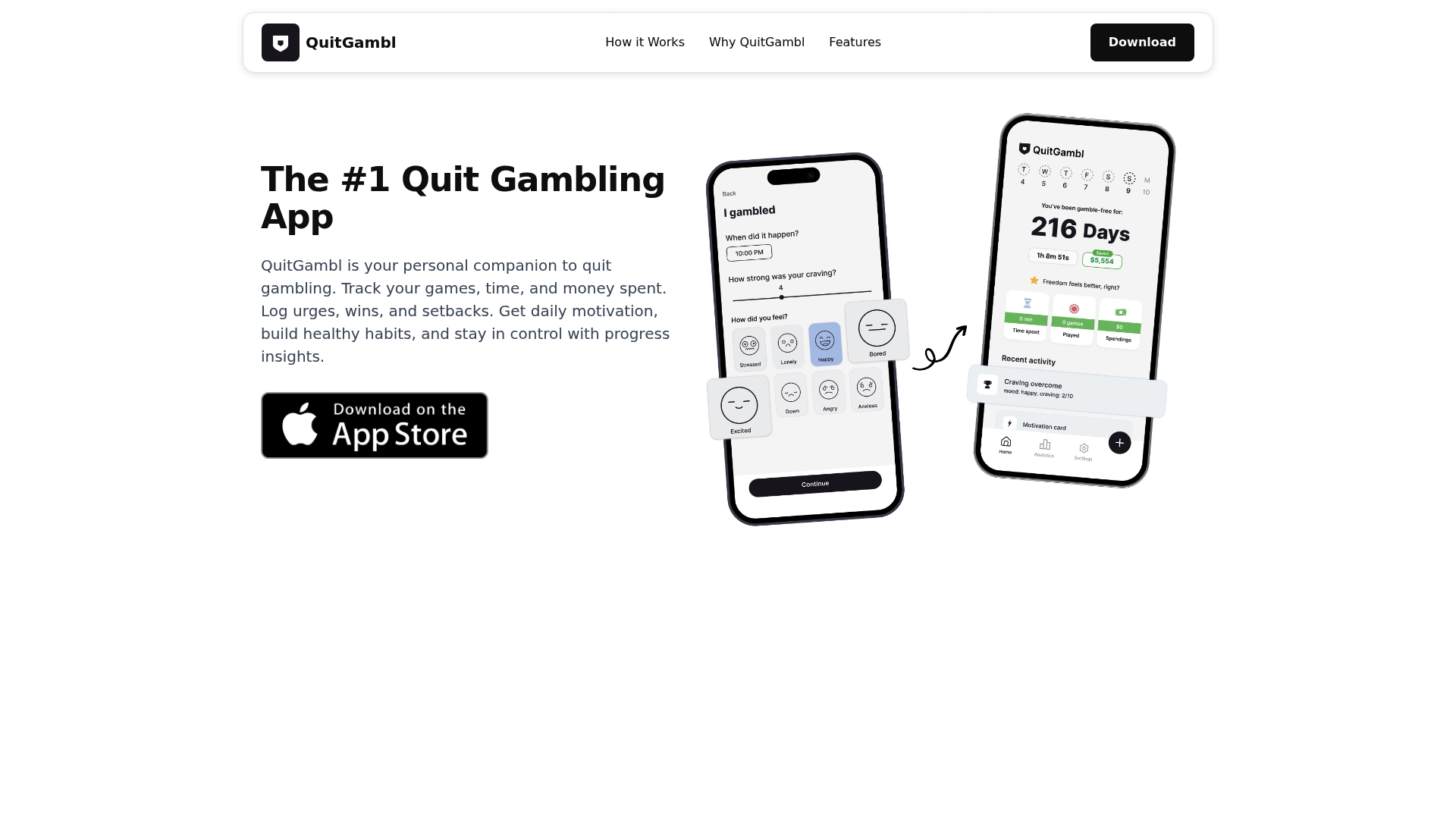
Progress analytics that span 90 days to one year sit at QuitGambl's core, giving you a clear trend line instead of isolated wins or slipups. The app combines session logging with mood and craving records so patterns surface visually over months.
Core Features
- Live stats for gamble-free time and money saved so you see immediate impact.
- Quick session logging that captures spend, duration, and context in seconds.
- Mood and cravings tracking to link emotional states with gambling episodes.
- Visual progress over set windows from three months up to a full year.
- Motivational tips and scheduled reminders to interrupt urges in real time.
Key Differentiator
QuitGambl centers on moment-to-moment accountability combined with medium-term trend reporting. That mix lets you stop a single relapse in its tracks while also spotting slow-building patterns that predict risk.
It is an app for self-guided behavior change, not a replacement for therapy. The focus on both immediate interruptions and longer term analytics is what sets it apart from simple timers or diaries.
Pros
- Real-time feedback. The live stats make savings and gamble-free minutes tangible, which helps maintain motivation on weak days.
- Emotional insight. Tracking mood and cravings alongside sessions gives you context for why episodes happen and where to add coping strategies.
- Low friction logging. Quick entry fields keep the habit of recording from becoming another barrier to use.
- Long view reporting. Seeing ninety-day and annual trends reduces the fixation on single setbacks and highlights progress.
- Free entry point. There is no purchase barrier to start experimenting with the app’s core workflows.
Cons
- Self-monitoring only. QuitGambl does not provide professional therapy or clinical intervention and lists that limitation clearly.
- Platform limit. The app is available only on iOS via the App Store, so Android users are left out.
- Not universally sufficient. Third-party reviews suggest it may not fit complex gambling problems or replace tailored therapy when that is needed.
When It May Not Fit
If you need guided counseling, structured therapy modules, or clinician oversight, QuitGambl will feel incomplete. The app’s tools stop short of clinical support and do not provide diagnosis or medical advice.
Also avoid it if you require cross-device parity. Android or web access is not part of the current offering, which matters if you switch phones or share tracking with a sponsor.
Who It's For
People who are self-motivated to reduce or stop gambling and who want a lightweight, private way to track sessions and emotions. If you use Support-milo for community encouragement, QuitGambl can pair with that peer support to turn insights into daily habits.
Real World Use Case
A person logs every gambling session for six months, tagging mood and craving intensity. They set reminders for high-risk times and review 90-day charts weekly. Over time the analytics reveal that weekend evenings and specific venues trigger the worst episodes, which informs practical avoidance steps.
Website: https://quitgambl.com
Comparative Analysis of Gambling Recovery Platforms
Selecting the solution for supporting recovery from gambling can significantly shape one's experience and progress. Below, we compare three prominent platforms—Support Milo, NoGamble, and QuitGambl—to examine their unique approaches, tradeoffs, and best-fit scenarios.
Focused Community Mechanisms
Support Milo excels at offering a community-driven recovery framework through its Zero Debt Service, enabling collaborative financial goals counterbalanced by visible progress tracking. Unlike NoGamble, which focuses solely on individual achievements, and QuitGambl, which emphasizes self-assessment analytics, Support Milo cultivates a collective sense of accountability integral to many users' recovery journeys. However, this system may rely on unverified financial claims, underscoring the need for user diligence.
Privacy and Simplicity
In contrast, NoGamble prioritizes privacy and ease of use, functioning as a minimalistic yet impactful app for addiction recovery. Its commitment to zero data collection and a straightforward interface addresses privacy concerns head-on; however, it lacks the advanced features and expansive scopes, such as group collaboration or extended data analytics. These benefits make it an excellent choice for users beginning their recovery quest under a gentle and no-cost resource.
Analytical Trends and Long-term Goals
QuitGambl provides superior personal insights through its extensive statistical tracking and analysis. By offering mood, craving, and financial saving logs over tailored timeframes, the platform supports long-term planning. Although limited to iOS users, it uniquely enables users to identify patterns integral to sustainable behavioral change.
Best Fit Scenarios
- For seeking a supportive and goal-sharing recovery community, Support Milo is the ideal choice.
- If requiring a strictly privacy-centered, straightforward approach to gambling recovery, NoGamble excels.
- For users with self-management focus needing detailed, long-term progress analysis, QuitGambl stands out.
Our Pick: Support Milo
Support Milo uniquely facilitates community-led collective recovery while balancing participation anonymity and tangible achievements. However, users primarily seeking tools for private progress tracking might explore NoGamble as an alternative. This distinction, drawn from analyzing each platform's key strengths, ensures an informed and meaningful choice aligning with recovery objectives.
Gambling Recovery Platforms Overview
Here we compare platforms focused on gambling recovery, highlighting their defining features and unique offerings to help you make an informed choice.
| Platform Name | Core Feature | Best For | Pricing | Notable Limitation |
|---|---|---|---|---|
| Support Milo | Community-driven debt resolution | Individuals seeking group accountability | Not disclosed | Limited identity verification for claims. |
| NoGamble | Streak tracking and budget overview | Immediate, low-cost gambling cessation | Free forever | Lacks advanced features and external integrations. |
| QuitGambl | Analytics for long-term gambling trends | Self-monitoring over extended periods | Free entry point | iOS-only platform, no Android or web access. |
Discover a Community-Powered Alternative to go.quitgamble.com
Struggling to find the right balance between tracking your gambling habits and gaining strong community support is a common challenge with many quit gambling tools. If you want more than just personal analytics, Support-milo offers a unique approach focused on collective debt repayment and emotional encouragement through features like the Hope Wall and the Zero Debt Service queue. These tools help turn individual recovery efforts into shared progress, giving motivation a visible, social boost.
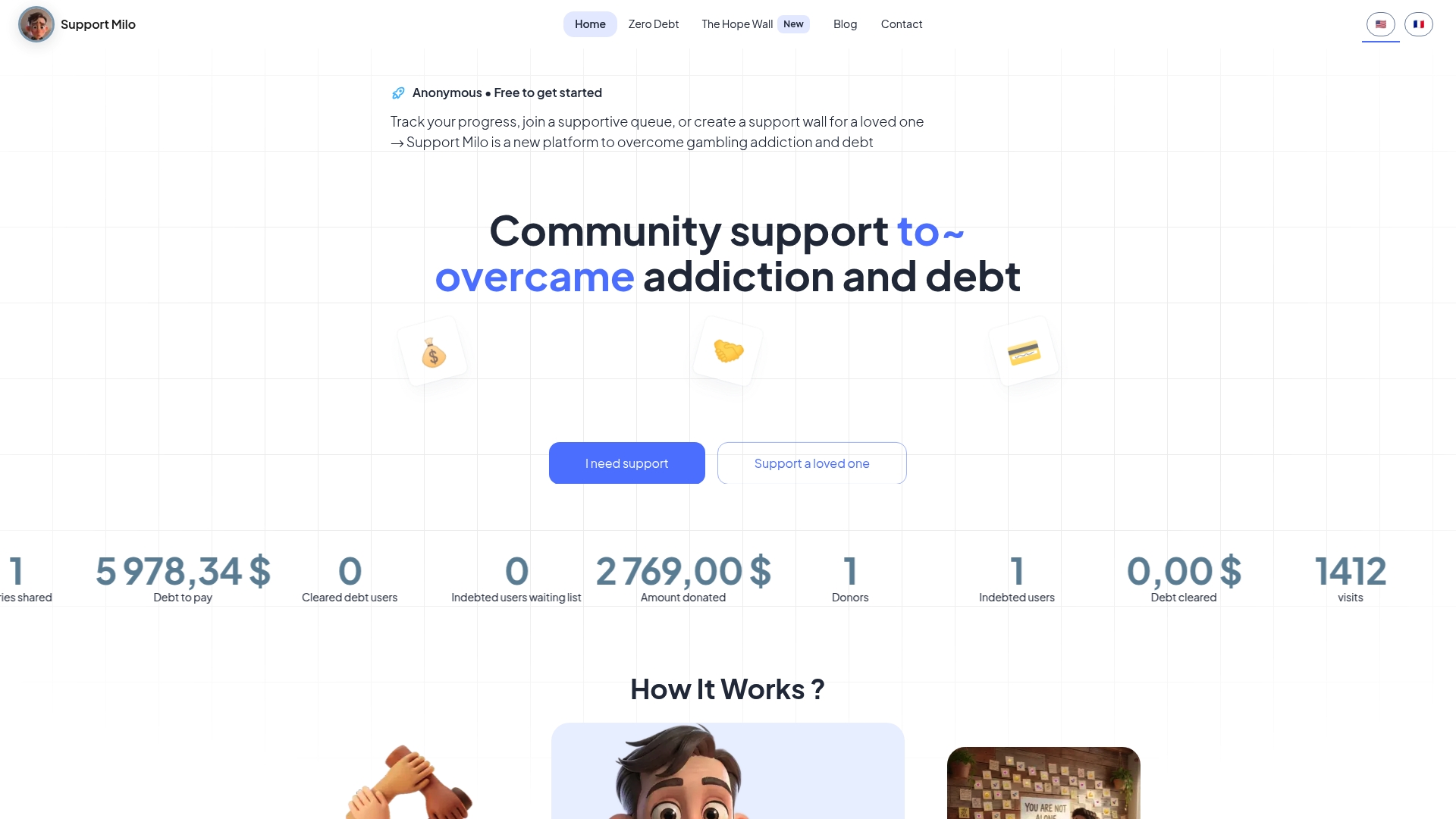
Explore how Support-milo’s transparent debt tracking and peer-driven support can redefine your recovery experience. Visit Support-milo and take part in a community where small steps become shared victories. Start by sharing your story or tracking your repayment milestones today and harness the power of mutual aid and hope.
Frequently Asked Questions
How does Support-milo enhance community accountability in debt recovery?
Support-milo emphasizes community-driven accountability by allowing members to share personal stories and track progress publicly. The Zero Debt Service feature creates a visible, collective approach to debt resolution, which helps maintain motivation and peer encouragement. Consider joining Support-milo to experience this supportive environment firsthand.
What is the difference between Support-milo and NoGamble?
NoGamble provides a privacy-first approach focused on daily tracking and positive reinforcement. In contrast, Support-milo's strength lies in the public tracking of collective debt repayment efforts via the Zero Debt Service, fostering community engagement and accountability. If you prefer a structured community support format, Support-milo is the better fit for your needs.
Which platform offers tools for emotional tracking alongside financial progress?
QuitGambl includes mood and craving tracking to help users understand emotional triggers related to gambling urges. While Support-milo centers on community-driven debt assistance, QuitGambl’s emotional insights can be beneficial for users seeking deeper self-understanding. Think about pairing Support-milo for community encouragement with QuitGambl for personal emotional management.
Can I participate anonymously in Support-milo if I'm concerned about privacy?
Yes, Support-milo allows for anonymous participation, which helps ease concerns about stigma or privacy. This feature makes it easier for individuals to join and engage with the community without fear of exposure. If privacy is a priority, Support-milo provides a comfortable entry point for support.
Does Support-milo offer specific tools for family members to provide support?
Yes, Support-milo provides support flows for both individuals and their loved ones, enabling family members to post encouragement or follow recovery updates. This feature fosters a more inclusive environment for everyone involved in the recovery process. If you're seeking comprehensive family involvement, Support-milo facilitates that connection.