


If you've slipped back into gambling after a period of stopping, you might be asking yourself: does this mean I've failed? Understanding what is gambling relapse, and how it differs from a brief lapse, can change everything about how you move forward. Relapse is not a character flaw or a sign that recovery is impossible. It's a well-documented part of the addiction recovery process, and recognizing it clearly is one of the most powerful things you can do for yourself or someone you love. 💛
Table of Contents
- Understanding gambling relapse: definitions and differences
- The relapse cycle and why it happens
- Recognizing warning signs and the early stages of relapse
- Coping strategies and relapse prevention tools
- Managing lapses and preventing them from becoming relapse
- Why relapse isn't failure and how new mindsets reshape recovery
- Support Milo: Your partner in managing gambling relapse
- Frequently asked questions
Key Takeaways
| Point | Details |
|---|---|
| Relapse vs lapse | A relapse is a prolonged return to gambling, while a lapse is a brief single episode. |
| High relapse rates | Over half of gambling recovery attempts include relapse, showing it is a common challenge. |
| Early warning signs | Emotional distress and neglecting self-care often precede gambling relapse. |
| Coping toolbox | Having multiple coping strategies is essential since no one works all the time. |
| Compassion matters | Responding to lapses with kindness helps prevent escalation into full relapse. |
Understanding gambling relapse: definitions and differences
Before anything else, let's get clear on the language. The words "lapse," "slip," and "relapse" get used interchangeably, but they actually mean different things in recovery, and that distinction matters more than most people realize.
A lapse is a brief, single episode of gambling after a period of abstinence. Think of it as a stumble. You placed a bet once, felt awful about it, and stopped. A relapse, on the other hand, is a full return to compulsive gambling lasting days or even weeks, where old patterns come rushing back.
Here's why this matters: if you treat a single slip like a full relapse, you're more likely to spiral. The shame of "I've ruined everything" can push you deeper into gambling, when in reality, you experienced a lapse that can be contained and learned from.
Key differences at a glance:
- Lapse: One gambling episode, short duration, quick return to recovery possible
- Relapse: Return to habitual gambling patterns, longer duration, requires active intervention
- Emotional relapse: A stage that often comes first, where self-care breaks down before any gambling occurs
You can explore gambling relapse resources to understand these stages in more depth and find support that fits where you are right now.
The relapse cycle and why it happens
Recovery from gambling addiction is rarely a straight line. Understanding why relapse happens, not just that it happens, gives you real power to interrupt the cycle.
Relapse rates for gambling addiction range from 50% to 75%, which tells you something important: this is not about willpower. It's about the chronic nature of addiction and the complexity of the human brain. Gambling hijacks the brain's reward system, and even after months of abstinence, certain situations can trigger intense urges.
The most common relapse triggers include:
- Stress and life pressure: A job loss, relationship conflict, or financial crisis can make gambling feel like an escape
- Social situations: Being around friends who gamble, visiting places tied to past gambling, or even watching sports betting ads
- Unresolved emotions: Stressful life events and unresolved emotions are among the most consistent triggers identified in recovery research
- Boredom and emptiness: Gambling often filled time and provided stimulation; without a replacement, the pull returns
- Overconfidence: Feeling "cured" and believing you can handle one bet
"Understanding your personal triggers isn't weakness. It's the foundation of every prevention strategy that actually works."
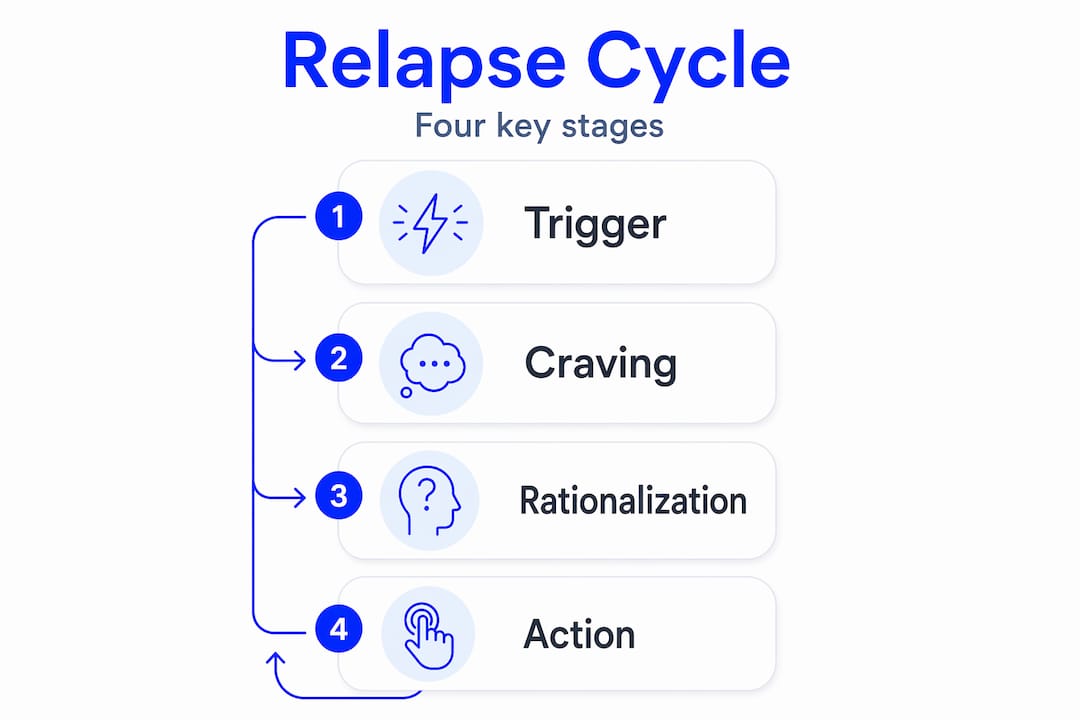
The relapse cycle often follows a pattern: trigger, craving, rationalization, then action. The good news is that every stage before the action is an opportunity to redirect. Building that awareness is the first step toward preventing gambling relapse before it takes hold.
Recognizing warning signs and the early stages of relapse
Here's something most people don't know: by the time someone places a bet in a relapse, the process started weeks earlier. Emotional relapse begins long before gambling, showing up as poor self-care, social withdrawal, and mounting emotional distress.
Learning to spot the common gambling relapse warning signs early gives you the chance to course-correct before things escalate. Watch for these stages:
- Emotional relapse: Neglecting sleep, skipping meals, isolating from friends and support networks, feeling irritable or overwhelmed
- Mental relapse: Thinking about gambling more often, romanticizing past wins, minimizing past losses, planning "just one bet"
- Physical relapse: Actually placing a bet
The HALT check is a simple but powerful tool here. Ask yourself: Am I Hungry, Angry, Lonely, or Tired? These four states lower your defenses and make gambling urges much harder to resist. If you're hitting two or more of those states at once, that's a signal to pause and take care of yourself before anything else.
Signs of gambling relapse to watch for day to day:
- Spending more time thinking about money or past gambling wins
- Avoiding conversations about recovery or progress
- Feeling restless or irritable without obvious cause
- Reconnecting with people or places tied to past gambling
- Telling yourself "I've been good for so long, I deserve a break"
Pro Tip: Keep a simple daily journal with just three questions: How am I feeling? Did I use my HALT check today? Did I connect with my support network? Consistency here builds the self-awareness that catches early relapse warning signs before they grow.
Coping strategies and relapse prevention tools
Knowing the warning signs is only half the equation. The other half is having a toolbox of responses ready before you need them.
Building 5 to 10 varied coping strategies is essential, because no single method works every time. What calms you during stress might not help when you're bored or lonely. Variety is protection.
Here's a practical comparison of coping strategy types:
| Strategy type | Best for | Example |
|---|---|---|
| Physical activity | Stress and restlessness | A 20-minute walk or workout |
| Social connection | Loneliness and isolation | Calling a trusted friend or support group |
| Mindfulness | Anxiety and cravings | Breathing exercises or a meditation app |
| Financial barriers | Impulsive urges | Self-exclusion programs, blocking gambling sites |
| Distraction activities | Boredom | A hobby, creative project, or volunteering |
One of the most underused prevention tools is removing financial access before you need to. Planned gambling episodes often begin days in advance by setting aside money quietly. Self-exclusion programs, handing control of finances to a trusted person, or using banking blocks on gambling sites can interrupt this planning phase entirely.
Additional strategies for preventing gambling relapse:
- Identify your top three personal triggers and write down a specific response for each
- Build a support contact list with at least two people you can call in a moment of high craving
- Create a delay rule: When an urge hits, commit to waiting 15 minutes before acting. Most urges peak and pass within that window
- Recognize rationalization early: Thoughts like "I'll only spend $20" or "I've been stressed lately, I deserve it" are not harmless. They're the opening act of a relapse
Pro Tip: Use relapse prevention tips to build your personalized plan. A written plan, even a simple one, is far more effective than a mental intention, especially when cravings hit hard.
Managing lapses and preventing them from becoming relapse
So what happens if a lapse does occur? The next 24 hours matter enormously.
Shame after a lapse can accelerate into relapse within days. The internal voice that says "I've already ruined it, I might as well keep going" is one of the most dangerous parts of the process. That voice is not truth. It's a symptom of the addiction trying to maintain its grip.
Here's how to respond to a lapse in a way that keeps it a lapse:
- Stop and breathe. Don't make any more decisions in the immediate emotional aftermath
- Reach out immediately. Contact your counselor, sponsor, or a trusted person in your support network
- Avoid isolation. Shame grows in silence. Connection shrinks it
- Reflect without judgment. Ask: What triggered this? What was I feeling? What coping tool was missing in that moment?
- Return to your routine. The fastest way back is to resume the recovery behaviors that were working, not to start over from scratch
Think of a lapse like a detour, not a dead end. You're still on the road. You just need to find your way back to the main path. Finding hope in recovery is possible even after a setback, and many people find their recovery actually strengthens after navigating a lapse with intention.
Pro Tip: Write a "lapse response plan" before you need it. Include who to call, what to do in the first hour, and one compassionate statement to read to yourself. Having it ready removes the need to think clearly when emotions are running high.
Why relapse isn't failure and how new mindsets reshape recovery
Here's the perspective most recovery content skips over: relapse doesn't mean the treatment failed. It means the situation called for a coping skill that wasn't in place yet.
Gambling was itself a coping mechanism, just a destructive one. When life got hard, stressful, or overwhelming, gambling provided a temporary emotional exit. A slip or relapse signals that the right coping tool wasn't available in that moment. That's a gap in the toolbox, not a flaw in the person.
We've seen this pattern clearly: people who treat relapse as information rather than verdict recover faster and more durably. They ask "what did I need that I didn't have?" instead of "why am I so weak?" That single reframe changes everything about how recovery is built.
Treating lapses with understanding rather than shame is not about lowering standards. It's about staying in the game long enough to build the skills that actually work. Harsh self-judgment, while understandable, tends to increase isolation and emotional distress, which are two of the biggest relapse triggers in the first place.
Recovery is not a test you pass or fail. It's a practice you keep returning to, with more tools each time. If you want to manage gambling relapse with a community behind you, that kind of support changes the experience entirely.
Support Milo: Your partner in managing gambling relapse
Recovery is always easier when you don't have to figure it out alone. 🤝
Support Milo is a nonprofit community platform built specifically for people navigating gambling addiction and its financial aftermath. Whether you're managing a recent lapse or supporting a family member through a difficult stretch, Support Milo connects you with people who genuinely understand.
Through enterprise support programs and practical tools like the Hope Wall, debt tracking, and community stories, Support Milo gives you a place to be honest about where you are without judgment. You can also access debt reduction assistance to address the financial side of recovery alongside the emotional one. Because healing the whole picture is what lasting recovery actually looks like. 💛
Frequently asked questions
What is the difference between a gambling lapse and relapse?
A lapse is a brief single gambling episode after abstinence, while a relapse is a full return to compulsive gambling behaviors lasting days or weeks.
Why is relapse so common in gambling addiction recovery?
Relapse rates of 50 to 75% reflect the chronic nature of gambling addiction, where emotional triggers, social situations, and ingrained brain patterns continue to create vulnerability long after stopping.
How can I prevent a lapse from becoming a relapse?
Respond with compassion rather than shame, reach out to your support network immediately, and quickly resume the healthy coping strategies that were working before the lapse occurred.
What are common early warning signs of relapse?
Emotional relapse signs include poor self-care, social withdrawal, and HALT states (Hungry, Angry, Lonely, Tired), often appearing weeks before any gambling takes place.
Is relapse a sign that treatment has failed?
No. A relapse signals that a specific coping tool was missing in that moment, not that recovery is impossible or that you have failed as a person.