


Gambling addiction is rarely just about money. It reaches into every corner of your emotional life, and for many people, anger is the emotion that does the most damage. It shows up in arguments at the kitchen table, in the silence after another broken promise, and in the quiet fury you feel toward yourself when you know something has to change. Anger is a common emotional response in gambling addiction for both individuals and families, triggered by losses, financial strain, lies, and broken trust. Understanding why anger is so powerful in this context, and what to actually do about it, can be the difference between a recovery that sticks and one that falls apart.
Table of Contents
- Understanding the anger-gambling connection
- Evidence-based therapies for anger and gambling addiction
- Support groups and community resources
- Setting boundaries and rebuilding trust in recovery
- Why conventional wisdom on anger and gambling falls short
- Finding specialized support for your journey
- Frequently asked questions
Key Takeaways
| Point | Details |
|---|---|
| Anger is a core issue | Addressing anger is essential for meaningful recovery from gambling addiction and for family healing. |
| Therapy and support groups help | CBT and peer groups like GA and Gam-Anon significantly improve emotional regulation and reduce gambling behaviors. |
| Boundaries and empathy matter | Healthy boundaries and empathy, not enabling, foster lasting progress for both individuals and families. |
| Use specialized resources | Community helplines and dedicated guides are vital for immediate support and long-term success. |
Understanding the anger-gambling connection
Anger does not arrive without reason. In gambling addiction, it has very specific triggers, and recognizing them is the first step toward breaking the cycle. When you lose money you could not afford to lose, anger is almost automatic. When someone you love discovers the lies, the shame and defensiveness can turn into rage. When financial strain mounts and there seems to be no way out, frustration boils over.
Common anger triggers in gambling addiction include:
- Financial losses and the realization of how much has been spent
- Broken trust after lying to family members or partners
- Confrontations from loved ones who feel betrayed or scared
- Shame and guilt that quickly convert into outward anger
- Cravings and urges that feel impossible to control
- Withdrawal from gambling causing irritability and emotional volatility
Here is a closer look at how emotional triggers translate into behavioral responses:
| Emotional trigger | Common behavioral response |
|---|---|
| Financial loss | Impulsive return to gambling to "win back" losses |
| Broken trust confrontation | Defensiveness, denial, or explosive arguments |
| Shame and guilt | Isolation, withdrawal from support systems |
| Cravings | Irritability, mood swings, emotional outbursts |
| Perceived criticism | Verbal aggression or shutting down completely |
| Stress and anxiety | Gambling as emotional escape, followed by more anger |
One of the most damaging patterns is what recovery specialists call the anger-relapse-isolation cycle. Anger builds, the person gambles to escape or numb the feeling, shame follows, and then isolation sets in. Isolation removes the accountability and support that make recovery possible, and the cycle repeats.
"Relapse often starts emotionally, with anger, irritability, and isolation. Prevention involves identifying triggers like stress and boredom, building coping plans, and re-engaging support networks before the urge becomes action."
For families, the emotional picture is just as complicated. Resentment builds over time, especially when a loved one has lied repeatedly or drained shared finances. That resentment can make it harder to offer the calm, consistent support that recovery actually needs. Families who want to help can find support for loved ones that addresses both the emotional and practical sides of this journey.
With anger identified as a central challenge, the next step is understanding solutions grounded in evidence-based treatment.
Evidence-based therapies for anger and gambling addiction
Not all therapy is created equal when it comes to gambling addiction and the anger that comes with it. The most researched and consistently effective approach is Cognitive Behavioral Therapy, or CBT. It works by targeting the thought patterns and behaviors that fuel both gambling urges and emotional dysregulation.
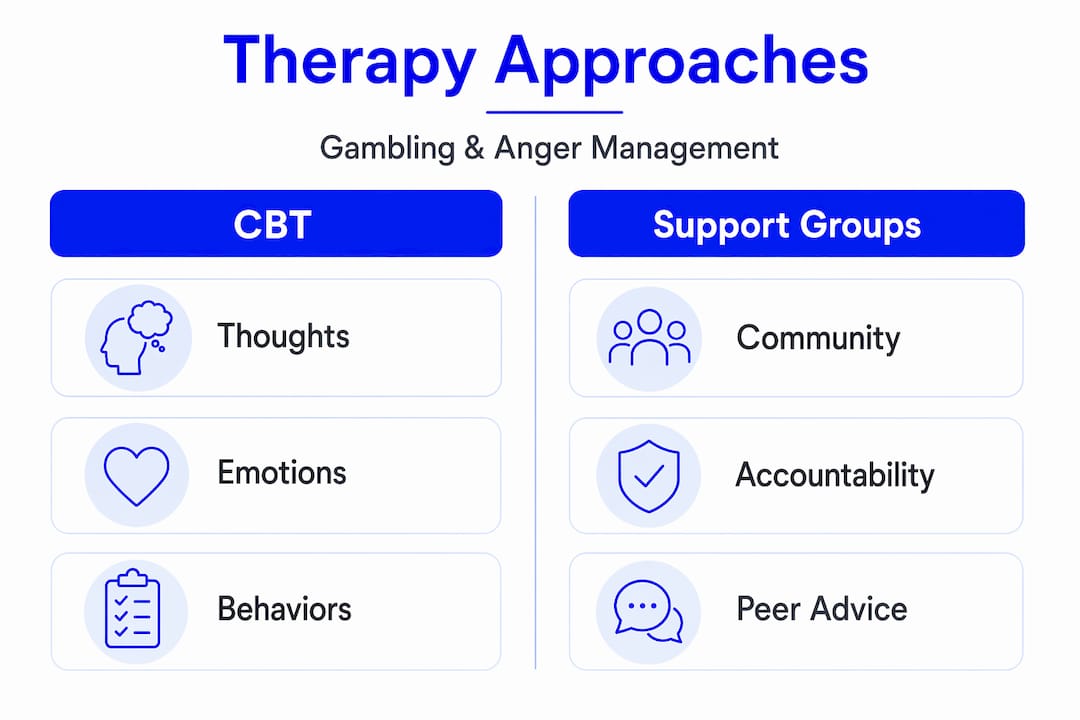
CBT is the most effective psychological treatment for gambling disorder, focusing on cognitive restructuring, behavioral activation, exposure therapy, relapse prevention, and coping skills for emotions like anger and stress. Research shows CBT provides moderate to large effect sizes (g = 0.72 to 0.92), meaning it produces meaningful, measurable change for most people who engage with it consistently.
Here is how a typical CBT process addresses the anger-gambling link:
- Identify distorted thinking. Your therapist helps you spot thoughts like "I deserve to gamble after a hard day" or "I'll win it all back," which are cognitive distortions that feed both gambling and anger.
- Challenge and restructure those thoughts. You learn to replace them with more realistic, grounded perspectives, reducing the emotional charge behind urges.
- Map your anger triggers. You build a personal trigger map, identifying the specific situations, people, or feelings that reliably precede both anger and gambling urges.
- Develop coping responses. Instead of reacting with anger or escaping through gambling, you practice specific responses: deep breathing, leaving the situation, calling a support person.
- Use behavioral activation. You replace gambling with rewarding, healthy activities that give your brain a genuine sense of accomplishment and pleasure.
- Practice relapse prevention. You create a written plan for what to do when high-risk situations arise, so you are not making decisions in the heat of the moment.
Here is a comparison of the two most common structured approaches:
| Feature | CBT | 12-step programs (e.g., GA) |
|---|---|---|
| Primary focus | Thought patterns and behavior change | Spiritual growth and peer accountability |
| Mechanism | Cognitive restructuring, skill building | Shared experience, step-by-step framework |
| Best strength | Measurable outcomes, anger management tools | Community connection, long-term fellowship |
| Format | Individual or group therapy sessions | Regular peer group meetings |
| Anger addressed? | Directly, as a core treatment target | Indirectly, through sharing and step work |
Pro Tip: Not every therapist is trained in both gambling disorder and anger management. When you search for a therapist, ask directly: "Do you have experience treating gambling addiction and emotional regulation together?" A dual-expertise therapist will understand how these two issues reinforce each other and tailor treatment accordingly.
Therapy is not the only path. Structured support groups offer community, accountability, and emotional recovery for individuals and families alike.
Support groups and community resources
There is something powerful about sitting in a room, or joining an online meeting, with people who truly understand what you are going through. Support groups do not replace therapy, but they add something therapy cannot always provide: lived experience, peer accountability, and the simple relief of not feeling alone.
Support groups like Gamblers Anonymous (GA) for individuals and Gam-Anon for families provide 12-step peer support to manage emotional recovery, set boundaries, and prevent relapse. Here is what each offers:
- Gamblers Anonymous (GA): Weekly meetings, a sponsor system, and a structured 12-step framework. Members share their stories, hold each other accountable, and work through the emotional wreckage of addiction together. Anger comes up often in these meetings, and hearing how others have managed it is genuinely instructive.
- Gam-Anon: Designed specifically for family members and friends of people with gambling problems. It helps loved ones process their own anger and resentment, learn healthy boundaries, and stop enabling behaviors that unintentionally prolong the addiction.
- Online meetings: Both GA and Gam-Anon offer virtual options, making support accessible no matter where you live or what your schedule looks like.
- Peer accountability: Having someone check in on you between meetings creates a layer of support that makes it much harder to slip back into old patterns.
- Shared emotional processing: Hearing others describe the same anger, shame, and fear you feel reduces isolation and normalizes the recovery experience.
When you need immediate help, the National Problem Gambling Helpline at 1-800-522-4700 (or 1-800-MY-RESET) offers 24/7 confidential support, referrals to local resources, family guidance, and financial protection plans. You do not have to be in crisis to call. Sometimes you just need to talk to someone who understands.
Pro Tip: Joining a support group as a family unit, where both the person with the addiction and their loved ones participate in their respective groups simultaneously, dramatically increases motivation and accountability for everyone involved. Recovery does not happen in isolation. It happens in community.
Families also need to grapple with a harder question: when does support become enabling? That is where boundaries become essential.
Setting boundaries and rebuilding trust in recovery
Boundaries are not punishment. They are not about anger or revenge. They are the structure that makes recovery possible for everyone in the household. Without them, even the most loving family can accidentally make the addiction easier to maintain.
Families experience anger and resentment from enabling behaviors. Strategies include setting financial boundaries, making direct bill payments, and seeking individual therapy to avoid codependency. Here are concrete steps you can take right now:
- Separate finances. Open individual accounts if you share finances with someone in active addiction. This protects both of you.
- Pay bills directly. Instead of giving cash or transferring funds, pay household bills yourself so money cannot be redirected to gambling.
- Remove access to credit. Work with your bank to set spending limits or remove joint credit access temporarily.
- Create a written agreement. Write down what behaviors are acceptable and what consequences will follow. This removes ambiguity and reduces the anger that comes from repeated boundary violations.
- Seek your own therapy. You cannot pour from an empty cup. Family members need their own support, separate from the person in recovery.
Watch for these signs of codependency and enabling:
- Covering gambling debts repeatedly without consequences
- Making excuses to others on behalf of the person with the addiction
- Avoiding difficult conversations to keep the peace
- Feeling responsible for managing the other person's emotions
- Sacrificing your own financial security to bail someone out
- Feeling guilty when you prioritize your own wellbeing
"Approach family interventions with empathy, not anger, recognizing addiction as a chronic disease. Avoid enabling while protecting finances to foster a recovery environment where real change becomes possible." This perspective, grounded in the chronic disease model of addiction, shifts the dynamic from blame to problem-solving.
You can find practical help for codependency and healthy boundaries that supports both individuals and families in building the structure recovery requires.
Recovery is complex, and it is worth stepping back to examine whether the most common advice about anger and gambling is actually helping.
Why conventional wisdom on anger and gambling falls short
Here is an uncomfortable truth: a lot of the popular advice about managing anger in gambling addiction is too simple, and some of it actively makes things worse.
The most common approach is to tell the person with the addiction to "just control yourself" or to tell families to "give an ultimatum." Both of these strategies are rooted in the idea that willpower and pressure are the primary tools of recovery. They are not. And when they fail, which they often do, the result is more shame, more anger, and a deeper sense of hopelessness.
We have seen this pattern repeatedly. Shame does not motivate lasting change. It fuels the very emotional dysregulation that drives people back to gambling. When a family member confronts with anger instead of empathy, the person with the addiction often hears "you are a bad person" rather than "we need help." That distinction matters enormously.
The chronic disease model of addiction reframes the conversation entirely. Addiction is not a moral failure. It is a condition that responds to treatment, community, and consistent support. When families understand this, they can approach interventions with empathy rather than judgment, which research consistently shows produces better outcomes for everyone.
Sustainable recovery means combining evidence-based therapy like CBT, peer support through groups like GA and Gam-Anon, and practical financial boundaries. No single element is enough on its own. The most resilient recoveries we have seen at Support Milo involve all three, working together over time.
The hard-won lesson is this: empathy is not weakness. Informed boundaries are not cruelty. When you hold both of those truths at once, you create the conditions where real recovery becomes possible. Explore recovery perspectives for families that honor both the struggle and the strength it takes to keep going.
Finding specialized support for your journey
The connection between anger, gambling addiction, and financial or family stress is real. But so is the possibility of recovery. You do not have to figure this out alone.
At Support Milo, we have built a community specifically for people navigating exactly this kind of challenge. Whether you are working through your own addiction or supporting someone you love, you will find people here who understand. Explore our financial recovery guides to take practical steps toward clearing debt and rebuilding stability. Visit our community hope stories on the Hope Wall to read real messages of encouragement from people who have been where you are. And when you are ready to take the next step, our ongoing support options connect you with resources, community, and tools designed for lasting recovery. You belong here. 💙
Frequently asked questions
Why does someone become so angry when dealing with gambling problems?
Anger is a natural reaction to the stress, financial losses, and broken trust that are central to gambling addiction, affecting both the person gambling and the people who love them.
What therapy works best for anger and gambling addiction?
CBT is the most effective treatment for gambling disorder, offering tools for cognitive restructuring, emotional regulation, and relapse prevention that directly address anger alongside addiction.
How can families set healthy boundaries without enabling gambling?
Direct bill payments and separate finances help prevent enabling, while seeking individual therapy gives family members the tools to build healthy, sustainable boundaries without resentment.
Where can I find immediate support for gambling-related anger?
The National Problem Gambling Helpline at 1-800-522-4700 offers 24/7 confidential support, local referrals, and family guidance, available any time you need it.