


Gambling Recovery Milestone Examples to Inspire Progress
Gambling recovery milestones are defined as measurable, meaningful achievements that mark your progress from active addiction toward a stable, gambling-free life. These markers include completing a course of Cognitive Behavioral Therapy (CBT), paying off your first debt, attending your first Gamblers Anonymous meeting, and rebuilding trust with family. They are not just feel-good moments. They are proof that your efforts are working. This article walks through real gambling recovery milestone examples across financial, behavioral, emotional, and identity categories so you can see where you are, celebrate how far you have come, and stay motivated for what is ahead.
1. What are gambling recovery milestone examples?
Gambling recovery milestone examples are specific, trackable achievements across four main areas: financial recovery, therapy and behavior change, emotional healing, and identity transformation. Each category contains milestones you can actually point to, not vague feelings of "doing better." Think of them as checkpoints on a long road. You do not need to reach the end to feel the win. Reaching each checkpoint is the win.
Recovery is not a straight line. Relapse is common and part of the process, not a sign of failure. What matters is sustained effort over time, and milestones give that effort a shape you can see and celebrate.

2. Financial milestones: the numbers that prove your progress
Financial milestones are often the most concrete gambling recovery milestone examples because they are measurable to the dollar. They also tend to follow a predictable timeline, which makes them powerful for planning and motivation.
Debt-related milestones typically occur between 4 and 48 months, with the first debts paid off around month 4, full debt freedom achieved between months 22 and 30, and emergency savings rebuilt within 24–42 months. That timeline shows that financial recovery is real and achievable, even when the debt feels overwhelming at the start.
| Financial milestone | Typical timeline | Common tools used |
|---|---|---|
| First debt paid off | Month 4 | Debt snowball method, financial counseling |
| All consumer debt cleared | Months 22–30 | Debt avalanche, accountability partner |
| Emergency fund started | Months 12–18 | Automatic savings transfers |
| Emergency fund complete | Months 24–42 | Budgeting apps, financial counselor |
| Full financial independence | Months 36–48 | Ongoing counseling, community support |
The debt snowball method, where you pay off your smallest debt first for a quick win, is especially effective in early recovery. It creates a positive reinforcement loop. Each cleared balance gives your brain a dopamine release, your invisible ally, that makes the next step feel possible.
Pro Tip: Find an accountability partner, a trusted friend, family member, or recovery peer, who checks in on your financial goals monthly. People who track progress with a partner are significantly more likely to follow through than those who go it alone.
You can also explore managing shared gambling debt if your finances are tied to a partner or family member, since shared debt adds complexity that benefits from a clear plan.
3. Therapy and behavioral milestones that signal real change
Therapy milestones are among the most powerful gambling addiction recovery steps because they reflect changes in how you think, not just what you do. CBT is the gold standard here. CBT shows measurable benefits in reducing gambling severity and financial losses for up to 12 months. Completing a full 12-month CBT course is a major milestone in itself.
Behavioral milestones go beyond therapy sessions. They show up in daily life as new habits and new responses to old triggers.
Here are key behavioral milestones to watch for and celebrate:
- First therapy session attended. Showing up is the hardest part.
- Urge surfed successfully. Urge peaks last 20–30 minutes; riding one out without acting is a genuine win.
- Blocking software installed. Surrendering control of finances or access to gambling sites is a strength, not a weakness.
- First Gamblers Anonymous meeting attended. Peer support combined with therapy improves long-term outcomes.
- 30 consecutive days without gambling. A behavioral pattern is forming.
- Completed a 12-week CBT program. Thought restructuring is now a practiced skill.
- Replaced a gambling trigger with a healthy response. For example, calling a friend instead of opening a betting app.
Peer support groups like Gamblers Anonymous combined with therapy improve accountability and long-term recovery success. Daily or regular attendance is linked with sustained recovery. The combination of professional therapy and peer connection creates a support structure that willpower alone cannot replicate.
Pro Tip: Use urge surfing as a daily practice, not just in crisis moments. Set a timer for 25 minutes when a craving hits. Breathe, observe the urge without acting, and watch it pass. The more you practice, the shorter and weaker the urges become.
4. Emotional and identity shift milestones: who you are becoming ❤️
Emotional milestones are harder to measure than financial ones, but they are just as real. They reflect the internal transformation that makes long-term recovery possible. These are the milestones that change not just what you do, but who you are.
Rediscovering joy without gambling
One of the most meaningful milestones in recovery is the first time you genuinely enjoy an activity that has nothing to do with gambling. A meal with friends. A walk in the park. A movie you actually watched instead of mentally calculating odds. This moment signals that your brain is rewiring. Pleasure is no longer exclusively tied to the rush of a bet.
Counting days as identity, not just numbers
One individual marked 1,000 days gambling-free, and described the experience as proof of persistence over perfection. Counting days is not obsessive. It is a daily act of self-honesty. Each number reinforces a new identity: you are someone who does not gamble. That shift in self-concept is one of the deepest milestones in the recovery process.
Rebuilding trust with the people you love
Gambling addiction often damages relationships through dishonesty, financial strain, and emotional absence. Rebuilding trust is a milestone that unfolds slowly. It might start with a single honest conversation. Then a promise kept. Then a month of consistent behavior. Families notice. And when they do, that recognition becomes its own form of motivation.
Responding differently to triggers
Early in recovery, a stressful day or a sports event on TV might feel like an automatic pull toward gambling. A later-stage milestone is recognizing that pull and choosing a different response without a major internal battle. Recovery includes reductions in frequency and severity of gambling behaviors, not necessarily immediate abstinence. Responding differently to a trigger, even once, is evidence that your recovery is working at a neurological level.
Reading how problem gambling progresses through stages can help you recognize where you started and how far you have moved. That perspective is itself a milestone.
5. Celebrating milestones safely: strategies that reinforce recovery
Celebrating your milestones is not optional. It is a core gambling recovery strategy. Celebrating recovery milestones, even small ones like 30, 90, or 1,000 days, turns quiet victories into tangible proof of progress. That proof builds confidence, which reduces relapse risk. The key is celebrating in ways that are disconnected from gambling money, gambling venues, or gambling-linked triggers.
Here is a comparison of celebration methods and why each one works:
| Celebration method | Why it works | Example |
|---|---|---|
| Social outing with recovery peers | Reinforces community and shared progress | Dinner with your Gamblers Anonymous group |
| Personal treat with saved money | Connects financial discipline to reward | A book, a meal, a day trip |
| Sharing your story publicly | Validates your progress and inspires others | Posting on the Support-milo Hope Wall |
| Marking the date with a ritual | Creates a memory anchor for the milestone | A journal entry, a photo, a small ceremony |
| Calling someone who supported you | Strengthens relationships and accountability | Thanking a family member or sponsor |
Milestone celebrations should avoid gambling-linked money or triggers. Using winnings or "house money" to celebrate creates a psychological association that undermines recovery. Use money you earned through work or saved through discipline instead.
Pro Tip: Write your next milestone into your recovery plan before you reach your current one. Knowing what you are working toward next keeps momentum alive between celebrations. Even a simple note like "When I hit 90 days, I will call my sister and go out for dinner" creates a forward-looking reward structure.
Sharing your story with others who are earlier in their recovery is one of the most powerful celebrations available. Collective stories inspire debt repayment and motivate others to keep going. Your milestone becomes someone else's hope.
Why milestones changed how I think about recovery
I have seen hundreds of recovery stories, and the ones that stick with me are never about the dramatic turning point. They are about the quiet Tuesday when someone paid off a credit card and cried in their car. Or the morning they woke up and realized they had not thought about gambling in three days. Those moments do not make headlines. But they are the real architecture of recovery.
The biggest mistake I see people make is waiting for a "big" milestone before they allow themselves to feel proud. Thirty days is enormous. Attending one therapy session is enormous. Telling one person the truth is enormous. Recovery is not a single event. It is a series of small, deliberate choices that compound over time.
Persistence over perfection is the only rule that matters. A relapse does not erase your milestones. It is data, not defeat. The people who recover long-term are not the ones who never slip. They are the ones who get back to counting days and keep showing up.
You are building something real. Every milestone, financial, behavioral, emotional, or identity-based, is a brick in that structure. Trust the process. Celebrate the bricks.
— Milo
How Support-milo helps you reach your next milestone
Recovery is easier with a community behind you. Support-milo is built exactly for that.
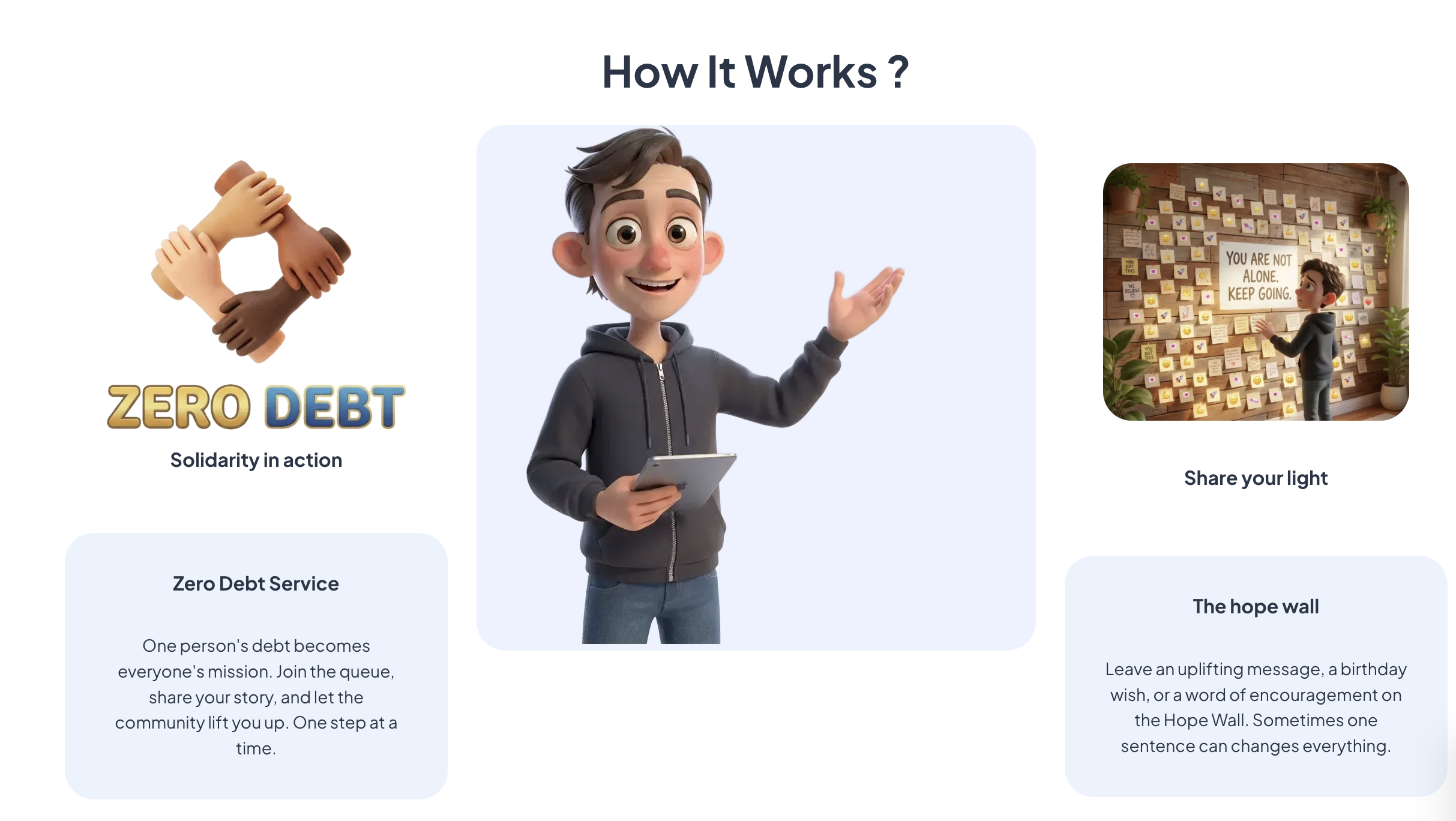
Support-milo is a community-driven platform where you can track your debt repayment progress, share your story, and connect with others who understand what you are going through. The Hope Wall lets you post and receive encouragement on the hard days. Transparent metrics show how much debt the community has cleared together, which makes your own progress feel part of something larger. Whether you are working toward your first financial milestone or celebrating 1,000 gambling-free days, Support-milo's recovery support gives you the tools, accountability, and community to keep moving forward. You do not have to do this alone.
FAQ
What counts as a gambling recovery milestone?
A gambling recovery milestone is any measurable achievement that marks progress away from active gambling addiction. Examples include completing a CBT program, paying off your first debt, attending 30 consecutive days without gambling, and rebuilding trust with a family member.
How long does it take to reach financial milestones in gambling recovery?
Financial milestones typically occur between 4 and 48 months into recovery. First debts are often paid off by month 4, full debt freedom is achieved between months 22 and 30, and emergency savings are rebuilt within 24–42 months.
Is relapse a sign that recovery milestones don't count?
Relapse is a common part of the recovery process and does not erase previous milestones. Recovery involves gradual reductions in gambling frequency and severity over time, and each milestone reached remains valid regardless of setbacks.
How should I celebrate a gambling recovery milestone safely?
Celebrate with social outings, personal treats funded by saved money, or by sharing your story with peers. Avoid using gambling-linked money or visiting venues associated with gambling, since those connections can undermine your progress.
What therapy milestones should I aim for in gambling addiction recovery?
Key therapy milestones include attending your first session, completing a 12-week CBT program, successfully using urge surfing during a craving, and establishing a regular Gamblers Anonymous attendance schedule. Each of these reflects measurable progress in changing thought patterns and behaviors.